

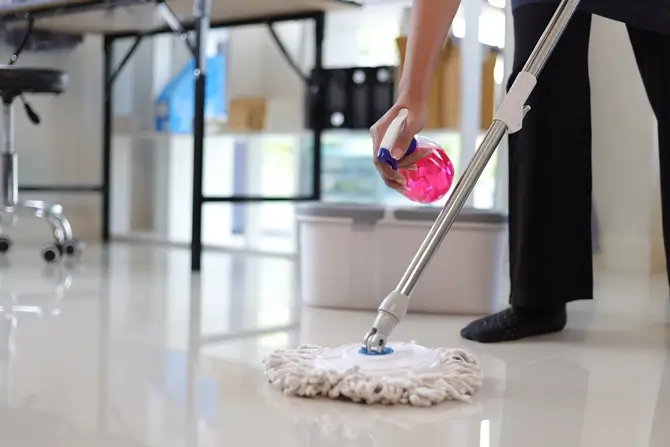
Keeping floors clean is more than just removing dirt, it is about eliminating harmful bacteria, viruses, and germs that put your family or staff at risk. Many homeowners and business owners in the UAE ask the same question: can disinfectant be used as a floor cleaner? The short answer is yes but only when used correctly.
Using the wrong product, wrong dilution, or wrong method can damage your floors or leave behind harmful residues. In this guide, Kemtech Hygiene Concepts breaks down everything you need to know about using disinfectants safely and effectively on floors.
Can Disinfectant Be Used as a Floor Cleaner?
Yes, disinfectant can be used as a floor cleaner when properly diluted and applied to hard surfaces like tiles, vinyl, and marble. However, always sweep or mop first to remove dirt, then apply the disinfectant solution and allow enough contact time to effectively kill bacteria and germs.
However, using disinfectant alone without pre-cleaning may reduce its effectiveness. Dirt and organic matter on the floor surface can block the active ingredients from working properly.
The best practice recommended by Kemtech Hygiene Concepts is a two-step process: clean first, then disinfect.
Types of Disinfectants Safe for Floor Cleaning
Not all disinfectants are suitable for all floor types. Here are the most commonly used options in the UAE:
1. Quaternary Ammonium Compounds (Quats)
Safe for most hard floors including tiles and vinyl. Widely used in hospitals, schools, and commercial spaces. Low odor and effective against a broad range of germs.
2. Bleach-Based Disinfectants
Highly effective but must be heavily diluted before use on floors. Can damage natural stone, marble, or colored grout. Best for heavy-duty sanitation in bathrooms or kitchens.
3. Hydrogen Peroxide-Based Disinfectants
Eco-friendly and safe for most floor types. Breaks down into water and oxygen leaving no harmful residue. Popular in food-safe environments.
4. Pine Oil Disinfectants
Traditional and widely available. Leaves a fresh scent and is effective against common bacteria. Safe on most tile and vinyl surfaces when properly diluted.
What Is the Difference Between a Disinfectant and a Floor Cleaner?
A disinfectant kills bacteria, viruses, and pathogens on surfaces, while a floor cleaner removes dirt, grease, and stains. Disinfectants can be used on floors when properly diluted, but they work best when the surface is cleaned first. For full hygiene, both steps are recommended together which is exactly what a professional floor cleaning product follows to deliver safe, germ-free results every time.
Read our other blog on: What is floor disinfectant?
Step-by-Step Process: How to Use Disinfectant as a Floor Cleaner
Follow these steps to clean and disinfect your floors safely and effectively:
- Remove Loose Dirt First: Sweep or vacuum the floor to remove dust, crumbs, and debris before applying any liquid.
- Prepare the Disinfectant Solution: Always follow the manufacturer’s dilution instructions. Most disinfectants require mixing with water before mopping.
- Test on a Small Area: Before applying to the entire floor, test the diluted solution on a hidden spot to check for discoloration or damage.
- Mop the Floor: Use a clean mop to apply the disinfectant solution evenly across the surface. Work in sections.
- Allow Dwell Time: Let the disinfectant sit on the surface for the recommended contact time (usually 3–10 minutes) to kill germs effectively.
- Rinse If Required: Some disinfectants leave a residue and require rinsing with clean water afterward, especially in food preparation areas.
- Allow to Dry Completely: Let the floor air dry or use a dry mop to prevent slippery surfaces and moisture buildup.
Benefits of Using Disinfectant on Floors
When used correctly, disinfecting your floors offers powerful hygiene and health benefits:
- Kills harmful bacteria and viruses including E. coli, Salmonella, and common cold and flu viruses
- Reduces the spread of infections in homes, offices, schools, and healthcare facilities
- Eliminates odor-causing microbes for fresher, cleaner-smelling spaces
- Provides a deeper clean beyond what regular floor cleaners offer
- Safe for high-traffic areas when the right product and dilution are used
- Meets UAE hygiene standards for commercial and public spaces
- Cost-effective: many disinfectants are highly concentrated and require minimal product per use
Disinfectant vs. Floor Cleaner: A Side-by-Side Comparison
| Feature | Floor Cleaner | Disinfectant |
| Removes Dirt & Grease | Yes | Limited |
| Kills Bacteria & Viruses | No | Yes |
| Safe on All Floor Types | Most | Check label |
| Requires Dilution | Sometimes | Almost Always |
| Leaves Residue | Rarely | Sometimes |
| Best For | Regular cleaning | Deep sanitation |
| Used Together | Recommended | Recommended |
Cost and Pricing Factors for Disinfectant Floor Cleaning in the UAE
Whether you are buying products for home use or hiring professional hygiene services, here are the key cost factors:
DIY Disinfectant Floor Cleaning
- Basic disinfectant concentrate (1–5L): AED 20 – AED 150
- Ready-to-use disinfectant spray: AED 15 – AED 60
- Mop and cleaning equipment: AED 30 – AED 200
Professional Floor Disinfection Services
- Small apartment or office: AED 150 – AED 400
- Medium commercial space: AED 400 – AED 1,000
- Large facility or warehouse: AED 1,000 – AED 5,000+
Kemtech Hygiene Concepts offers customized hygiene solutions for homes and businesses across the UAE at competitive, transparent pricing.
Common Mistakes to Avoid When Using Disinfectant on Floors
Many people unknowingly reduce the effectiveness of disinfectants or cause surface damage. Avoid these common errors:
Skipping the Pre-Clean Step: Applying disinfectant to a dirty floor blocks active ingredients from reaching the surface. Always sweep or mop with plain water first.
Using Undiluted Disinfectant: Concentrated disinfectants used directly on floors can cause discoloration, surface damage, and harmful fume buildup. Always dilute as directed.
Not Allowing Dwell Time: Wiping the floor immediately after applying disinfectant does not give it enough time to kill germs. Follow the recommended contact time on the label.
Using Bleach on Marble or Natural Stone: Bleach-based disinfectants can permanently damage marble, granite, or natural stone floors. Always choose a pH-neutral disinfectant for these surfaces.
Mixing Disinfectants with Other Cleaners: Never mix disinfectants with other chemicals unless the label specifically allows it. Mixing bleach with ammonia-based cleaners, for example, creates toxic fumes.
Using the Same Mop for All Areas: Using one mop throughout the entire property spreads germs from one area to another. Use separate mops for different zones, especially bathrooms and kitchens.
Best Practices for Floor Hygiene in UAE Homes and Businesses
The UAE climate hot, humid, and dusty demands a higher standard of floor hygiene. Here are expert tips from Kemtech Hygiene Concepts:
- Disinfect high-touch floor areas (entrances, bathrooms, kitchens) at least twice a week
- Use microfiber mops for better germ capture and reduced water usage
- Store disinfectants in cool, dry places away from direct sunlight
- Train staff or household members on correct dilution and application methods
- Schedule professional deep cleaning every 3–6 months for commercial spaces
Clean Floors Start With the Right Hygiene Plan
So, can disinfectant be used as a floor cleaner? Absolutely when used correctly, with the right product, proper dilution, and a smart two-step process. For UAE homes and businesses, combining regular floor cleaning with targeted disinfection is the gold standard for hygiene and health.
Don’t leave your floor hygiene to chance.
Contact Kemtech Hygiene Concepts today for expert advice, premium hygiene products, and professional floor disinfection services across the UAE.
Frequently Asked Questions (FAQs)
Can I mix disinfectant with floor cleaner?
Mixing disinfectant with floor cleaner is generally not recommended unless both products are compatible. It can reduce effectiveness or create harmful chemical reactions. Always check product labels before combining any cleaning solutions.
Is floor cleaner the same as disinfectant?
No, floor cleaners remove dirt and stains, while disinfectants kill bacteria and viruses. They serve different purposes. For full hygiene protection, it is best to use both products as part of a two-step cleaning process.
Can I clean my floors with disinfectant spray?
Yes, disinfectant spray can be used on floors for quick sanitization between deep cleans. Always sweep first, spray evenly, allow dwell time, and wipe or let dry. It works best on tiles, vinyl, and sealed hard floors.
What is a good substitute for floor cleaner?
A diluted disinfectant solution, white vinegar mixed with water, or a mild dish soap solution can substitute for floor cleaner in emergencies. However, dedicated floor cleaners are always more effective for removing grease, stains, and heavy dirt buildup.
What do professional cleaners use to mop floors?
Professional cleaners typically use pH-neutral floor cleaners combined with commercial-grade disinfectants, microfiber mops, and color-coded cleaning systems. Products are chosen based on floor type, level of soiling, and required hygiene standards for the specific environment.
What is the most hygienic way to clean floors?
The most hygienic method is a two-step process: first sweep or vacuum, then mop with a disinfectant solution using a clean microfiber mop. Change mop water regularly, allow proper dwell time, and let floors dry completely to prevent bacterial growth.