

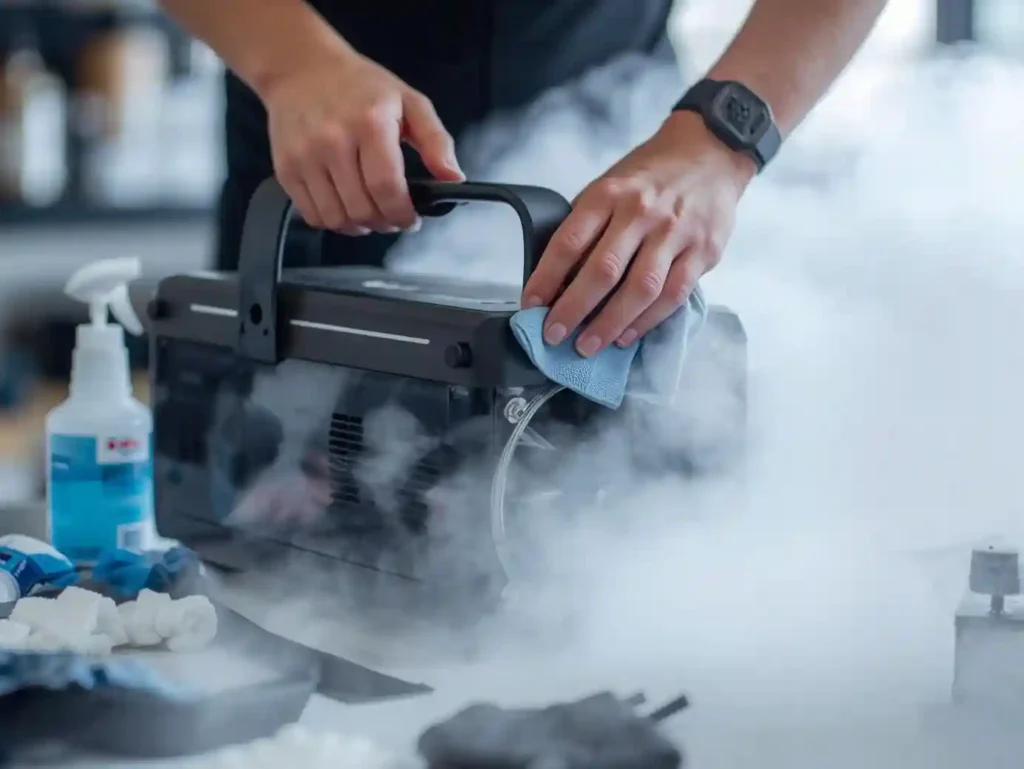
How to Clean a Fog Machine?
Your fog machine is not just a party prop. Whether you use it for theatrical productions, outdoor pest control, HVAC sanitization, or event atmospherics, a dirty fog machine is a failing fog machine. Residue builds up inside the pump, heating element, and nozzle, leading to weak output, inconsistent mist, and eventually complete breakdowns.
Based on testing and hands-on maintenance work across dozens of fogging units in the UAE, this guide covers everything from a quick between-event flush to a full deep-clean procedure. You will also learn which mistakes silently destroy machines, and which products and methods actually work in the field.
Here is a Quick Answer:
- Run a cleaning solution through the machine every 8-10 hours of use to flush residue.
- Wipe the exterior with a damp, lint-free cloth after every session.
- Flush with distilled water before long-term storage to prevent mineral buildup.
- Never use tap water as fog fluid or for cleaning mineral deposits clog the pump and heating element.
- Deep clean every 3-6 months depending on usage frequency and environment.
By the end of this guide, you will know exactly how to clean any fog machine properly, how often to do it, and how to keep your equipment performing reliably for years.
Why Cleaning Your Fog Machine Matters?
Most fog fluids are water-based solutions with glycol compounds (typically propylene glycol or glycerin). Over time, these fluids leave sticky residue inside the pump, tubing, and heating block. When residue bakes onto the heating element, it insulates the surface, forcing the element to work harder and heat unevenly. The result is inconsistent fog output, a burnt smell, or no output at all.
In practice, working with clients across event production and pest-control fogging in the UAE, the most common reason a machine gets replaced prematurely is simply that nobody cleaned it between seasons. The repair cost often exceeds the value of the unit. Regular cleaning is pure preventive maintenance with a strong return on investment.
What You Need Before You Start?
Gather these materials before beginning any cleaning procedure:
- Commercial fog machine cleaning solution (specifically formulated, not household cleaners)
- Distilled water (never tap water)
- Lint-free microfiber cloths
- Soft-bristle brush for the nozzle area
- Isopropyl alcohol (70%) for exterior contact points
- Small funnel for controlled fluid transfer
- Protective gloves
- Empty container to catch discharge fluid
Important Warning: Never use household cleaners, bleach, vinegar, or dish soap inside a fog machine. These substances degrade rubber seals, corrode metal parts, and can produce toxic vapor when heated. Only use solutions specifically designed for fog machine maintenance.
How to Clean a Fog Machine?
This is the standard cleaning routine for fog machines used regularly. Follow these steps in sequence.
1. Power Down and Cool Completely
Switch the machine off and unplug it. Allow it to cool for a minimum of 30 minutes. The heating element reaches temperatures above 150°C during operation. Attempting to clean a hot machine is dangerous and will damage seals.
2. Empty the Fluid Tank
Remove the fog fluid reservoir and pour out any remaining fluid. Do not mix leftover fluid back into a fresh bottle as residue can contaminate the entire stock. Dispose of used fluid responsibly.
3. Fill the Tank with Cleaning Solution
Pour the manufacturer-recommended cleaning solution into the tank. If you do not have a commercial cleaner, a 50/50 mix of distilled water and food-grade propylene glycol can work as a short-term flush, though dedicated cleaning solutions are more effective at dissolving residue.
4. Run the Machine Through a Full Cycle
Reconnect the machine, power it on, and allow it to heat up fully. Then trigger the fog output in short 30-second bursts until the cleaning solution has fully cycled through. You will typically see slightly off-color or slightly cloudy fog initially. When the output runs clear, the internal flush is complete.
5. Flush with Distilled Water
Empty the tank, fill it with clean distilled water, and run a second cycle. This rinse removes any remaining cleaning solution residue. Run until output is clear and odor-free.
6. Clean the Nozzle and Exterior
Use a soft-bristle brush to gently clear any dried residue around the nozzle opening. Wipe the entire exterior with a microfiber cloth dampened with isopropyl alcohol. Pay particular attention to ventilation slots, which can accumulate dust and reduce airflow to the heating element.
7. Dry and Store Properly
Leave the tank empty and open for at least an hour to air dry. Store in a cool, dry location away from direct sunlight. In Dubai’s humidity fluctuations, storing with the tank dry prevents microbial growth inside the reservoir.
Pro Tip: After the final distilled water flush, leave a small amount (about 50ml) of fresh fog fluid in the tank before storing. This keeps the pump seals lubricated and prevents them from drying out and cracking during storage periods.
For businesses and individuals across the UAE, Kemtech has established itself as a leading supplier of professional-grade fogging machines Dubai. Our range covers everything from compact residential units to high-capacity commercial and industrial foggers suited for pest control, disinfection, and event production. Want to learn more about fogging machines read our blog, What Is Fogging Machine and How It Really Works?
Fogger Machines Cleaning Frequency Guide
| Usage Type | Frequency of Use | Flush Cycle | Deep Clean |
|---|---|---|---|
| Event / Entertainment | Occasional (1–4x/month) | After every use | Every 6 months |
| Theatrical / Production | Regular (weekly) | Every 8–10 hours | Every 3 months |
| Pest Control Fogging | Daily or near-daily | After every session | Monthly |
| HVAC / Sanitization | Regular commercial use | After every session | Every 6–8 weeks |
| Long-Term Storage | Infrequent | Before storing | Before re-commissioning |
When to Deep Clean a Fogging Machine?
A standard flush handles day-to-day buildup. But every 3 to 6 months, or whenever you notice significantly reduced output or a burning odor, your machine needs a deeper clean.
The deep clean involves the same flushing steps, but with a soak phase. Fill the tank with cleaning solution and let it sit unpowered for 2 to 4 hours. This allows the solution to dissolve hardened glycol deposits inside the tubing and heating block before you run the machine. After soaking, proceed with the standard flush cycle.
For commercial or industrial foggers used in pest control or disinfection applications, consider having the unit professionally serviced annually. Internal components like the pump diaphragm and check valves may need inspection or replacement beyond what a DIY clean can address.
Mistakes That Silently Damage Your Machine
- Leaving fluid in the tank between uses allows fluid to settle, separate, and leave sticky residue on tank walls that hardens over time.
- Running the machine dry forces the pump to operate without the lubrication the fluid provides, causing rapid wear on the pump diaphragm.
- Using low-quality or expired fog fluid introduces impurities and breakdown products into the system at higher rates.
- Skipping the cool-down period before handling means residual heat can warp plastic components or cause burns.
- Storing the machine with a full fluid tank in high-heat environments (common in UAE summers) can cause fluid to degrade and form deposits faster.
Conclusion
Cleaning a fog machine is not complicated, but it requires consistency. A few minutes of proper maintenance after each use will save you hundreds of dirhams in repairs and extend the life of your equipment by years. The key principles are simple: use the right fluids, flush regularly, deep clean periodically, and store properly.
If you are looking to upgrade or source new equipment built for professional use in the Gulf region, Kemtech Hygiene Concepts remains one of the top choices for quality fogging machines Dubai professionals rely on. Our team can advise on the right unit for your specific application and ensure you have access to the cleaning supplies and replacement parts you need to keep operations running without interruption.
Frequently Asked Questions
How do I know when my fog machine needs cleaning?
Watch for these signals: reduced fog output volume, longer heat-up times than when the machine was new, a burnt or unusual smell during operation, visible discoloration in the fog output, or fluid leaking from the nozzle area. Any of these indicate it is time for at minimum a flush cycle, and possibly a deep clean.
Can I make my own fog machine cleaning solution?
A distilled water flush alone handles mild residue between commercial cleaning sessions. Some technicians use a diluted solution of distilled water and food-grade propylene glycol (around 20% glycol). However, for serious buildup, commercial cleaning solutions contain surfactants specifically designed to break down glycol deposits. They are inexpensive and worth keeping on hand.
Is it safe to clean a fog machine myself, or should I use a professional?
The standard flush cycle is simple and safe for any user to perform. Deep cleaning of external components is also DIY-friendly. However, disassembling the pump, replacing check valves, or descaling the heating element internally should only be done by someone with experience in the specific machine model. Incorrect reassembly can create leak points or damage the pump permanently.
How long does a fog machine last with proper maintenance?
A quality fog machine maintained with regular cleaning can last 5 to 10 years or more in professional use. Research suggests that the primary causes of early failure are lack of cleaning, use of incompatible fluids, and improper storage. Units neglected for even one season of heavy use can suffer irreversible pump and heating element damage.
What type of fog fluid works best for low residue buildup?
Water-based fluids with a higher water-to-glycol ratio produce less residue per hour of operation. Look for fluids marketed as “water-based” or “low-glycol” for regular use. Thick or “dense fog” fluids use higher glycol concentrations and require more frequent cleaning as a result. Always match the fluid specification to your machine’s manufacturer recommendations.
Can I use the same cleaning steps for a misting fogger used in pest control?
The core principles are the same, but pest control foggers often need more frequent cleaning due to the chemical compounds in pest-control solutions leaving residue that differs from standard fog fluid. After any session involving pesticides or disinfectants, flush immediately with distilled water, then run a dedicated cleaning cycle. Never mix pest-control chemicals with fog fluid in the same tank.