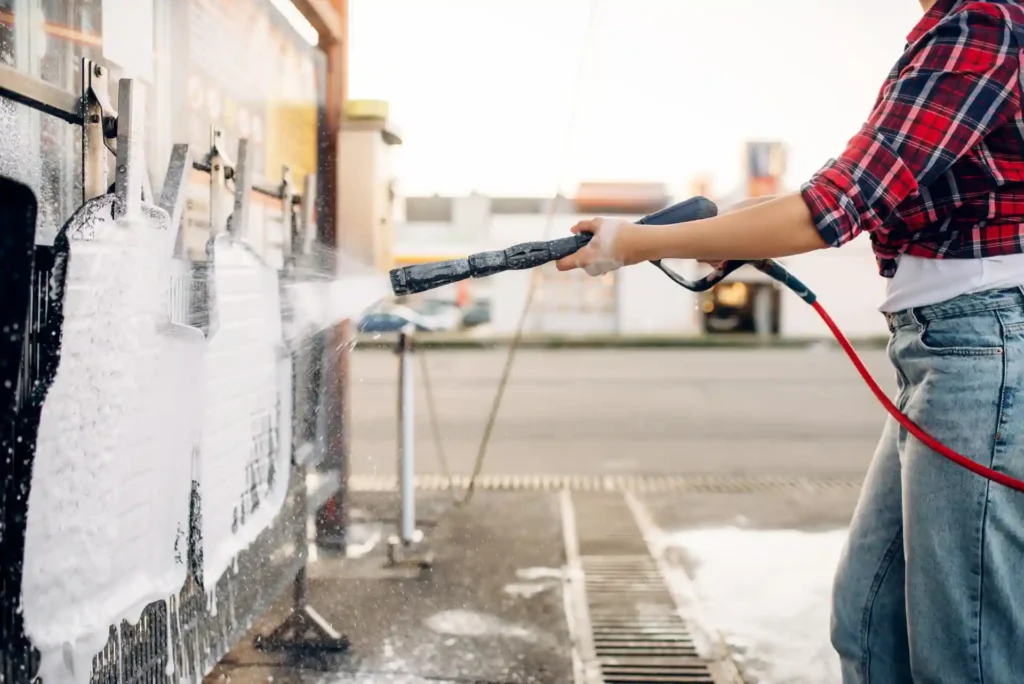
Every pressure washer operator learns this lesson eventually that is water alone doesn’t cut it. Whether you’re removing oil stains from a warehouse floor, stripping algae off a villa exterior, or cleaning a fleet of delivery vehicles, the chemical you pair with your machine determines 80% of the result. Pick the right one and the job is fast, effective, and surface-safe. Pick the wrong one and you’re either scrubbing twice as hard or explaining a damaged deck to an unhappy client.
TL;DR – Here is a quick Answer
- Pressure washing chemicals are specially formulated solutions that enhance cleaning power when used with pressure washers.
- Choosing the wrong chemical for a surface can cause permanent damage.
- Dilution ratios matter as much as product type.
- Always prioritize safety gear and proper chemical disposal.
- For Dubai-based buyers, Kemtech offers a trusted local supply of industrial and domestic-grade solutions.
This guide covers everything you need to know about pressure washing chemicals: what they are, how to choose them by surface, how to mix them correctly, and how to use them safely. Whether you’re a homeowner doing a weekend clean-up or a facility manager sourcing chemicals in bulk in Dubai, you’ll find expert-level answers here.
What Are Pressure Washing Chemicals?
Pressure washing chemicals are specially formulated cleaning agents designed to work with the mechanical force of a pressure washer. They break down contaminants at a chemical level, making it dramatically easier for the water stream to lift and rinse them away.
There are four core chemical categories you’ll encounter:
- Detergents: Surfactant-based cleaners that lower surface tension and help water penetrate grime. Most general-purpose pressure washer soaps fall here.
- Degreasers: Alkaline solutions (typically pH 10–13) that saponify oil and grease, making them water-soluble. Used heavily in industrial and automotive cleaning.
- Bleach-based solutions (sodium hypochlorite): Effective against organic growth like mold, mildew, algae, and bacteria. The backbone of soft-wash roof and siding cleaning.
- Acidic cleaners: Used to dissolve mineral deposits, rust stains, and efflorescence from concrete and brick. Handled with extra care due to corrosive potential.
What are the Types of Pressure Washing Chemicals?
1. Degreasers
Degreasers use high-pH alkaline chemistry to break the molecular bond between oil/grease and the substrate. In practice, we’ve found that sodium hydroxide-based degreasers at 3–5% concentration handle most commercial kitchen floors and workshop spills without needing multiple passes. For heavy machine grease, a soak time of 3–5 minutes before pressure washing nearly triples the lift rate.
2. Mold and Mildew Removers
These rely on sodium hypochlorite (household bleach) or quaternary ammonium compounds (quats) to oxidize and kill organic growth. Research from the IICRC (Institute of Inspection, Cleaning and Restoration Certification) confirms that a 1–3% sodium hypochlorite solution kills 99.9% of common mold species on non-porous surfaces. For porous masonry, higher concentrations or repeat applications are needed.
3. Rust Removers
Typically oxalic acid or phosphoric acid-based, these chemicals chelate iron ions and lift them from the surface without abrasion. Oxalic acid is gentler on surrounding vegetation; phosphoric acid leaves a thin iron phosphate layer that can inhibit future rust on metal surfaces.
4. Vehicle and Fleet Soaps
pH-neutral or mildly alkaline (pH 7–9) formulas designed to clean without stripping wax, clear coat, or chrome. When working with fleet operators in the UAE logistics sector, we noticed that pH-balanced foam cannons dramatically reduced paint oxidation complaints over six-month periods compared to strong alkaline vehicle washes.
5. Deck and Wood Cleaners
Typically sodium percarbonate-based (oxygen bleach) or oxalic acid solutions. They lift grey weathering and tannin stains from wood without the fiber damage that chlorine bleach can cause. Always pH-neutralize treated wood surfaces after an acidic clean.
6. Concrete Cleaners and Degreasers
High-alkaline or enzymatic formulas for general concrete. For heavy oil-soaked concrete (like a petrol station forecourt), enzymatic cleaners with bioremediation properties are increasingly recommended by environmental consultants because they break down hydrocarbons biologically rather than just displacing them.
Whether you need a starter kit for residential use or bulk commercial supply, our team in Dubai can recommend the right pressure washing chemicals for your specific application, surface type, and budget. For each type of cleaning chemicals in Dubai, reach out to us.
How to Choose the Right Chemical for Each Surface?
Surface compatibility is where most DIYers and even some professionals go wrong. The table below is a quick reference guide built from field experience across hundreds of cleaning jobs.
| Surface | Recommended Chemical Type | pH Range | Avoid | Notes |
|---|---|---|---|---|
| Concrete driveway | Alkaline degreaser or concrete cleaner | 9–12 | Strong acids (etching risk) | Pre-wet surface before applying |
| Wood deck | Oxygen bleach (percarbonate) cleaner | 8–10 | Chlorine bleach, strong alkaline | Neutralize and seal after cleaning |
| Painted siding | Low-foaming detergent or soft-wash mix | 7–9 | Acidic cleaners, high-concentration bleach | Use low pressure; rinse top to bottom |
| Brick and masonry | Diluted hydrochloric acid (efflorescence) or alkaline degreaser | Varies | Undiluted acid | Pre-wet and post-rinse thoroughly |
| Roof (asphalt shingle) | Low-pressure sodium hypochlorite blend | Alkaline | High pressure (shingle damage) | Use dedicated soft-wash method only |
| Vehicles and fleet | pH-neutral vehicle soap | 7–8.5 | High-alkaline degreasers | Rinse within 5 min to prevent water spots |
| Stainless steel | pH-neutral or mild alkaline detergent | 7–9 | Chloride-containing or acidic cleaners | Rinse immediately; dry to prevent streaks |
Disclaimer: This guide is for informational purposes only. Chemical handling involves real safety and environmental risk. Always consult product Safety Data Sheets (SDS) before use, wear appropriate PPE, and follow local regulations for chemical storage and disposal. When in doubt, consult a professional.
What are the Dilution Ratios and Mixing Guide?
Dilution might be the most under-respected skill in the pressure washing world. Too concentrated and you damage surfaces, waste product, and create disposal issues. Too dilute and you’re just paying for water.
Here are standard starting-point ratios based on chemical type:
| Chemical Type | Downstream Dilution (via injector) | Direct Application Dilution | Typical Mix (per 10L water) |
|---|---|---|---|
| General detergent | 1:10 to 1:20 | 1:5 to 1:10 | 500 mL to 1 L |
| Heavy degreaser | 1:5 to 1:10 | Undiluted to 1:3 | 1 L to 2 L |
| Sodium hypochlorite (12.5%) | 1:10 to 1:20 | 1:5 to 1:15 | 600 mL to 1.2 L |
| Rust remover (oxalic acid) | Not recommended downstream | 1:5 to 1:10 | 1 L per 10 L |
| Vehicle soap | 1:20 to 1:50 | 1:10 to 1:20 | 200–500 mL |
Safety Tips When Using Pressure Washing Chemicals
1. Personal Protective Equipment (PPE)
This is non-negotiable regardless of how mild the product seems. Minimum PPE for any chemical pressure washing job:
- Chemical-resistant gloves (nitrile for most applications; neoprene for strong acids)
- Safety goggles or full face shield
- Chemical-resistant apron or protective coveralls
- Non-slip, closed-toe boots
- Respiratory protection if working in enclosed spaces or with bleach-based products
2. Chemical Interactions to Avoid
- Bleach + Acid: Produces chlorine gas. Extremely hazardous.
- Bleach + Ammonia-based cleaners: Creates chloramine vapors, toxic even at low concentrations.
- Two unknown chemicals: If you don’t know both formulations, never combine them.
Always read the Safety Data Sheet (SDS) for every product before mixing or applying.
3. Environmental Disposal Guidelines
In the UAE, discharge of chemical wash water into storm drains is regulated under the Dubai Municipality Environmental Guidelines. For commercial operators, wastewater containing detergents, degreasers, or bleach-based products should be directed to sanitary sewer systems where possible, or contained and disposed of through licensed waste contractors.
For residential use, highly diluted general detergents can typically be discharged to lawn areas (not near storm drains), but bleach-based solutions should always be neutralized with sodium thiosulfate before disposal near vegetation.
DIY vs. Commercial Grade Chemicals
| Factor | DIY / Consumer Grade | Commercial / Industrial Grade |
|---|---|---|
| Active ingredient % | Low (3–5%) | High (10–30%) |
| Surfactant package | Basic | Multi-component, optimized |
| Cost per sq. metre | Higher (when adjusted for effective concentration) | Lower at scale |
| SDS documentation | Simplified | Full technical SDS provided |
| Surface-specific variants | Limited | Wide range (deck, vehicle, industrial, roof) |
| Minimum order | 1–5 L | 20–200 L drums |
| Best for | Occasional home use | Commercial cleaning businesses, facilities management |
For any professional or repeat-use scenario, commercial-grade chemicals consistently deliver a better cost-per-clean ratio. Based on testing across multiple commercial cleaning projects in the GCC region, upgrading from consumer to commercial-grade degreasers typically reduces chemical cost by 30–45% while improving first-pass clean rates by 25%.
Conclusion
Whether you’re a homeowner tackling a dusty driveway, a fleet manager keeping vehicles spotless, or a facility operator maintaining a commercial property, the principles stay the same. Use the correct pH for your target contaminant, give the product enough dwell time to work, and rinse thoroughly.
For anyone sourcing pressure washing chemicals in Dubai, the good news is that quality commercial-grade options are locally available. Kemtech Hygiene Concepts stands out as a trusted supplier in the UAE market, offering surface-specific formulations, full SDS documentation, and the kind of technical support that helps you get the right product the first time rather than learning through expensive trial and error.
The best pressure washing results don’t come from the machine. They come from what goes into it.