

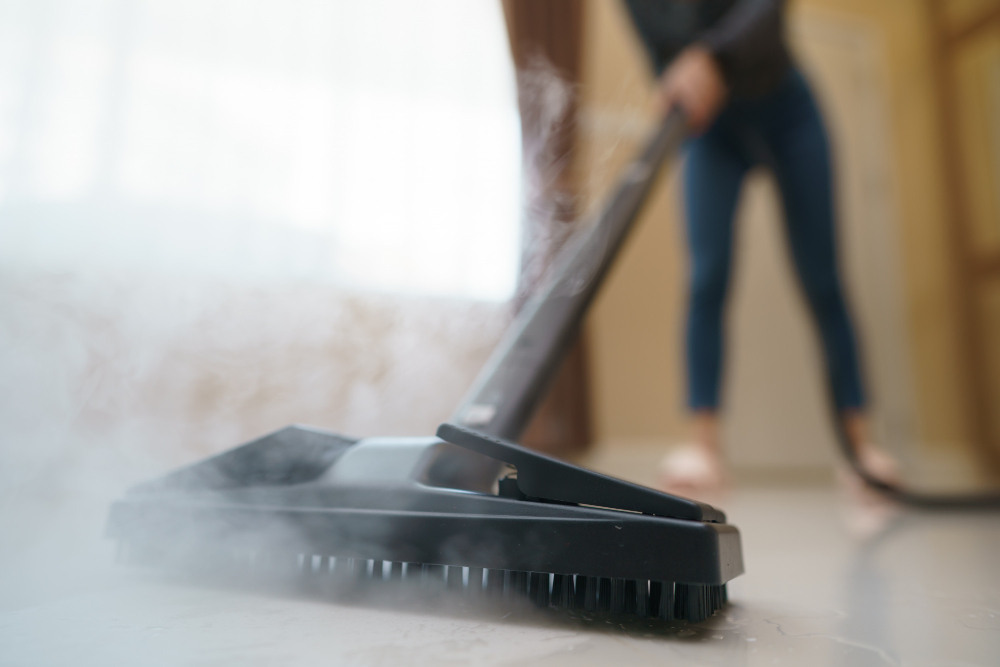
Steam mops have become a popular cleaning tool across UAE homes and businesses. They promise powerful, chemical-free cleaning using only hot steam. But many people wonder: can you put floor cleaner in a steam mop to boost its performance? It seems like a smart idea: more cleaning power, better results, right? Not quite.
Adding the wrong solution to your steam mop can damage the machine, void your warranty, and even leave harmful residue on your floors. In this guide, Kemtech Hygiene breaks down everything you need to know before adding anything to your steam mop’s water tank.
What Is a Steam Mop and How Does It Work?
A steam mop heats water to produce high-temperature steam that sanitizes and loosens dirt from hard floors. It is designed to use distilled or tap water only, not floor cleaning solutions.
Steam mops work by heating water in an internal tank to around 120°C (248°F). The pressurised steam is pushed through the mop pad, which lifts dirt, grease, and bacteria from floor surfaces. This makes them highly effective for tile, hardwood, laminate, and stone floors common in UAE homes and offices.
Can You Put a Floor Cleaner in a Steam Mop?
The short answer is no. Most steam mop manufacturers clearly state that only water should go into the tank. Adding floor cleaner, dish soap, or any detergent to the water reservoir can cause several serious problems.
Why Floor Cleaners Are Harmful to Steam Mops:
- Soap residue clogs the internal pump and steam nozzles over time.
- Chemical build-up shortens the lifespan of the heating element.
- Detergents can leave a sticky film on your floors, attracting more dirt.
- Harsh chemicals mixed with high heat may release toxic fumes.
- Voids the manufacturer warranty on your machine.
What Can You Put in a Steam Mop Safely?
While floor cleaners are off the table, there are a few safe options that some steam mop brands allow. Always check your user manual first.
1. Distilled Water (Best Option)
Distilled water is the gold standard. It contains no minerals, so it prevents limescale build-up inside the tank and steam nozzles. This is especially important in the UAE, where tap water tends to be hard and mineral-rich.
2. White Vinegar (In Small Amounts — If Allowed)
Some users add a small amount of white vinegar to the water for added deodorizing power. However, this is only safe if your manufacturer allows it. Vinegar is acidic and can corrode rubber seals inside certain steam mop models.
Essential Oils (Diluted, If Permitted)
Want your floors to smell fresh? A few drops of essential oil like lavender or tea tree can be added to the water in some models. Use only 2–3 drops. Never use concentrated oils as they can block internal parts.
Benefits of Using a Steam Mop Correctly
When used as intended, a steam mop is one of the most effective tools for floor cleaning. Here is why:
- Kills up to 99.9% of bacteria and germs without chemicals.
- Safe for children and pets — no toxic residue.
- Removes tough grease and grime from tile and grout.
- Works on multiple surfaces: tile, marble, hardwood, and laminate.
- Eco-friendly cleaning — reduces use of disposable products.
- Fast drying time — steam evaporates quickly.
- Cost-effective in the long run — no need to buy floor cleaning solutions.
How to Use a Steam Mop Correctly: Step-by-Step
Follow these steps to get the best results from your steam mop without causing damage:
- Fill the water tank with distilled or filtered water only.
- Attach a clean microfiber mop pad to the base.
- Plug in the mop and allow it to heat up for 30 seconds.
- Glide the mop slowly across your floor in steady strokes.
- For stubborn stains, hold the mop in place for 5–10 seconds.
- After use, empty remaining water from the tank.
- Remove and wash the mop pad after each use.
- Descale the machine monthly using a vinegar solution (if allowed by manufacturer).
Steam Mop vs. Traditional Mop: Which Cleans Better?
| Feature | Steam Mop | Traditional Mop |
| Chemical Use | None required | Floor cleaner needed |
| Disinfection | Kills 99.9% bacteria | Depends on product |
| Drying Time | Very fast (minutes) | Slow (30+ minutes) |
| Cost Over Time | Low (water only) | Ongoing product costs |
| Ease of Use | Simple, lightweight | More physical effort |
| Floor Safety | Safe if used correctly | Chemicals may damage floors |
Common Mistakes to Avoid When Using a Steam Mop
- Using tap water in hard water areas: UAE tap water is high in minerals. Always use distilled or filtered water to prevent limescale damage.
- Adding dish soap or detergent: Even a small amount of soap will foam up and clog internal parts of your steam mop.
- Using it on unsuitable floors: Steam mops are not recommended for unsealed hardwood or wax-coated floors. Always check floor compatibility.
- Leaving water in the tank: Stagnant water encourages bacteria and scale build-up. Empty the tank after every use.
- Using dirty mop pads: A dirty pad spreads bacteria instead of removing it. Wash your microfiber pads after every session.
- Moving too fast: Slow, steady strokes allow steam to penetrate and sanitize properly. Rushing reduces effectiveness.
Conclusion: Steam Smart, Clean Safe
The answer is clear: do not put floor cleaner in your steam mop. The machine is engineered to work with water alone, and adding chemical solutions risks damaging your device, harming your floors, and exposing your family to unnecessary chemical fumes.
Stick to distilled water. Use a few drops of essential oil or diluted vinegar only if your manual permits. Keep your mop pads clean and your tank empty between uses. These simple habits will extend the life of your machine and keep your floors hygienically clean.
Need Professional Floor Cleaning in UAE?
At Kemtech Hygiene Concepts, we specialize in expert hygiene and cleaning chemicals for homes and businesses across the UAE. Whether you need deep floor cleaning services or high-quality cleaning equipment, our team is ready to help. Contact Kemtech Hygiene today and experience the difference that professional cleaning makes.
Frequently Asked Questions (FAQs)
Is it safe to put floor cleaner in a steam mop?
No, it is not safe. Floor cleaners can clog the pump, damage internal seals, and leave harmful residue. Only use distilled or filtered water unless your manufacturer specifically says otherwise.
What can I put in my steam mop to make my floor smell good?
A few drops of essential oils like lavender or eucalyptus can be added if your model allows it. Alternatively, use a light white vinegar solution. Always check your user manual before adding anything.
Does a steam mop really clean floors?
Yes, steam mops are highly effective. The high-temperature steam kills up to 99.9% of bacteria and lifts stubborn dirt and grease from tiles, marble, and sealed hardwood floors.
Can I use vinegar in a steam mop?
Some models allow diluted white vinegar for descaling or odor control. However, vinegar can corrode rubber seals in certain machines. Always confirm with your manufacturer before using it.
Is steam alone enough to disinfect floors?
Yes. Steam at 120°C is a proven disinfectant. It kills common household bacteria, dust mites, and some viruses without the need for chemical cleaning products.
What is a natural cleaning solution for a steam mop?
Distilled water is the safest natural option. You can also add a small amount of white vinegar or 2–3 drops of tea tree essential oil if your steam mop manufacturer permits additives.