Chemical cleaning is one of the most effective ways to remove stubborn dirt, grease, bacteria, and industrial build-up from surfaces. But using the right chemicals alone is never enough. The machine behind the process makes all the difference.
From high-pressure washers to industrial scrubber dryers, each machine is designed to work with specific cleaning agents for maximum results.
Whether you manage a commercial facility, industrial plant, or residential property in the UAE, understanding which cleaning machines are used for chemical cleaning helps you make smarter, cost-effective decisions. Keep reading the full breakdown is right below.
Which Cleaning Machines Are Used for Chemical Cleaning?
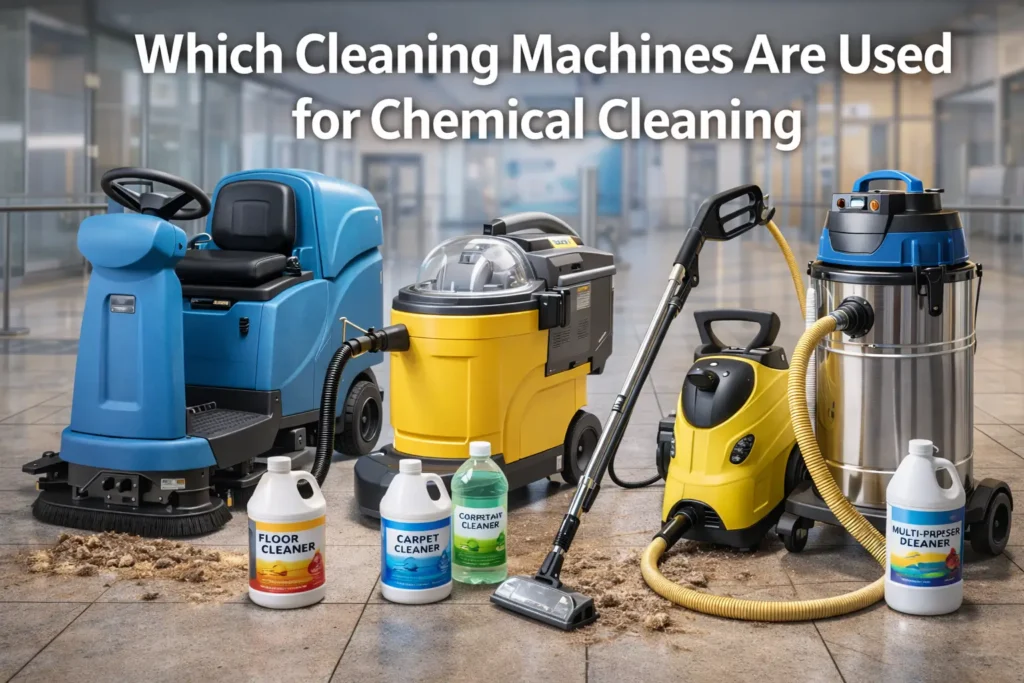
The most common machines used for chemical cleaning include pressure washers, scrubber dryers, steam cleaners, foam sprayers, chemical dosing systems, and ultrasonic cleaners. Each machine is designed for specific surfaces and chemical types, ensuring deep cleaning, sanitation, and surface protection across industrial, commercial, and residential environments.
1. Pressure Washers
Pressure washers are among the most widely used machines for chemical cleaning. They combine high-pressure water flow with cleaning agents to blast away grease, dirt, mold, and grime from hard surfaces.
Best used for:
- Exterior building walls and facades
- Parking lots, driveways, and concrete floors
- Industrial equipment and machinery
- Vehicles and heavy transport fleets
Types of pressure washers:
- Cold water pressure washers: Ideal for general dirt and dust removal
- Hot water pressure washers: More effective with degreasers for oil and grease
- Industrial-grade pressure washers: For heavy-duty commercial and factory use
Hot water models are especially effective when combined with chemical degreasers, making them a top choice for UAE industrial facilities.
2. Scrubber Dryers
Scrubber dryers are floor cleaning machines that apply chemical cleaning solution, scrub the surface, and vacuum up the dirty water all in one pass.
Ideal for:
- Shopping malls and retail spaces
- Warehouses and logistics centers
- Hospitals, clinics, and healthcare facilities
- Airport terminals and large commercial spaces
Two main types:
- Walk-behind scrubber dryers: for smaller or medium-sized areas
- Ride-on scrubber dryers: for large warehouses and open floor spaces
These machines work best with pH-neutral or low-foam chemical detergents that do not damage the machine’s internal components.
3. Steam Cleaners
Steam cleaners use superheated steam often combined with chemical agents to sanitize, degrease, and disinfect surfaces without heavy scrubbing.
Common applications:
- Kitchen equipment and food preparation areas
- Upholstery, carpets, and fabric surfaces
- Bathroom tiles, grout, and sanitary fixtures
- Hospital and laboratory environments
Steam cleaning is one of the most eco-friendly chemical cleaning methods available. The high temperature activates cleaning chemicals at lower concentrations, reducing chemical usage while improving results.
4. Foam Sprayers and Foam Cannons
Foam sprayers apply thick chemical foam directly onto surfaces. The foam clings to vertical surfaces longer, allowing the chemical to penetrate and break down dirt before rinsing.
Best used for:
- Vehicle and fleet washing
- Food processing plant walls and equipment
- Cold storage facilities
- Exterior building surfaces
Foam cleaning is especially popular in the UAE’s food and beverage sector because it covers large surfaces quickly and reduces manual labor significantly.
5. Chemical Dosing Systems
Chemical dosing systems are automated machines that mix and dispense the correct ratio of cleaning chemicals into water or other carrier fluids. They are used in large-scale cleaning operations where consistency and safety are critical.
Industries that rely on dosing systems:
- Hotels and hospitality facilities
- Hospitals and pharmaceutical plants
- Food manufacturing and processing units
- Industrial laundry operations
Why dosing systems matter:
Using too much or too little chemical reduces effectiveness and wastes money. Dosing systems ensure every cleaning cycle uses the exact right amount, saving costs and improving hygiene standards.
6. Ultrasonic Cleaning Machines
Ultrasonic cleaners use high-frequency sound waves combined with chemical cleaning solutions to remove contaminants from complex or delicate components.
Commonly used for:
- Jewelry, optical lenses, and watch parts
- Medical and dental instruments
- Electronic circuit boards and components
- Automotive engine parts and carburetors
The ultrasonic waves create microscopic bubbles that implode against the surface, dislodging dirt even from the smallest crevices all while the chemical solution dissolves contaminants simultaneously.
7. Carpet and Upholstery Cleaning Machines
These machines inject chemical cleaning solution deep into carpet fibers or fabric, agitate the surface, and then extract the dirty liquid using powerful suction.
Best suited for:
- Hotels, offices, and residential properties
- Car interiors and commercial vehicle seats
- Event venues and cinema halls
- Healthcare waiting areas and corridors
In the UAE’s dust-heavy environment, carpet extraction machines combined with anti-allergen or antibacterial chemicals are essential for maintaining indoor air quality.
Step-by-Step: How Chemical Cleaning Machines Are Used
Surface Assessment: Identify the surface type, level of soiling, and the most suitable machine and chemical combination.
Choose the Right Chemical: Select a chemical agent compatible with the machine and safe for the surface — degreaser, disinfectant, descaler, or detergent.
Prepare the Machine: Fill the chemical tank or connect the dosing system. Set the pressure, temperature, or dilution ratio as required.
Apply the Chemical: Apply the cleaning agent using the machine — whether spraying foam, injecting into carpet, or mixing into scrubber water.
Agitate and Dwell: Allow the chemical to dwell on the surface for the recommended contact time before scrubbing or rinsing.
Rinse and Extract: Remove the chemical residue using clean water rinse, extraction vacuum, or the machine’s built-in recovery system.
Dry and Inspect: Allow the surface to dry and inspect for remaining stains or missed areas before declaring the job complete.
Benefits of Using the Right Chemical Cleaning Machine
Using the right cleaning machines in UAE delivers deeper results, cuts labor time, and ensures consistent hygiene across every facility.
- Delivers deeper cleaning results than manual methods
- Reduces labor time and operational costs significantly
- Ensures consistent hygiene standards across large facilities
- Minimizes chemical waste through precise dosing and application
- Protects surfaces from damage caused by incorrect cleaning methods
- Meets UAE health, safety, and hygiene compliance requirements
Comparison: Chemical Cleaning Machines at a Glance
| Machine | Best Surface | Chemical Type | Scale |
| Pressure Washer | Hard outdoor surfaces | Degreasers, descalers | Medium–Large |
| Scrubber Dryer | Indoor hard floors | Neutral detergents | Medium–Large |
| Steam Cleaner | Fabrics, tiles, kitchen | Low-concentration agents | Small–Medium |
| Foam Sprayer | Walls, vehicles, equipment | Alkaline foam cleaners | Medium–Large |
| Ultrasonic Cleaner | Delicate components | Specialized solvents | Small |
| Carpet Extractor | Carpets and upholstery | Extraction shampoos | Small–Medium |
Common Mistakes When Using Chemical Cleaning Machines
- Using the wrong chemical for the machine damages seals and internal parts
- Skipping surface assessment before choosing the cleaning method
- Over-diluting chemicals, making them ineffective against bacteria and grease
- Not following the chemical dwell time before rinsing
- Using high-pressure washers on delicate surfaces, causing permanent damage
- Ignoring machine maintenance, leading to inconsistent cleaning results
Cost Factors for Chemical Cleaning Machine Services in the UAE
- Type and size of the machine required for the job
- Area size — larger spaces require more time, chemicals, and equipment
- Frequency of cleaning — one-time deep clean vs. scheduled maintenance contract
- Type of surface and level of contamination
- Chemicals used — industrial-grade agents cost more than standard detergents
- Whether equipment is rented, owned, or part of a full-service contract
Partnering with a professional cleaning company often provides better value than purchasing and maintaining equipment independently.
Choose the Right Machine for Powerful Chemical Cleaning Results
Choosing the right cleaning machine is just as important as choosing the right chemical. Whether you need a pressure washer for outdoor surfaces, a scrubber dryer for large floor areas, or an ultrasonic cleaner for delicate components the right combination delivers results that manual cleaning simply cannot match.
At Kemtech Hygiene Concepts, our specialists assess your facility, recommend the most suitable machines and chemicals, and deliver professional results that meet the highest UAE hygiene and safety standards.
Contact Kemtech Hygiene Concepts Today to Get a Free Site Assessment and Start Cleaning Smarter!
Frequently Asked Questions (FAQs)
Which machine is best for chemical cleaning of industrial floors?
Ride-on scrubber dryers combined with industrial degreasers are the best choice. They cover large areas quickly, remove heavy grease build-up, and leave floors dry and safe for workers.
Can pressure washers be used with all types of chemicals?
Only chemicals specifically formulated for pressure washers should be used. Using incompatible chemicals can damage the pump, seals, and nozzles while creating safety hazards.
Are steam cleaners effective for disinfection?
Steam cleaners reach temperatures above 120°C, which kills most bacteria, viruses, and mold spores. When combined with the right chemical agent, they provide hospital-grade disinfection results.
How often should chemical cleaning machines be serviced?
Machines used in commercial or industrial settings should be serviced every 3 to 6 months. Regular maintenance ensures consistent performance, extends machine life, and prevents chemical residue build-up.
What chemicals are commonly used in scrubber dryers?
pH-neutral floor detergents, low-foam cleaners, and antibacterial solutions are most commonly used. Avoid high-foam products as they can block the machine’s recovery tank and suction system.
Is ultrasonic cleaning safe for all materials?
Ultrasonic cleaning is not suitable for soft gemstones, certain plastics, or porous materials. Always check material compatibility before using an ultrasonic cleaner with chemical solutions.