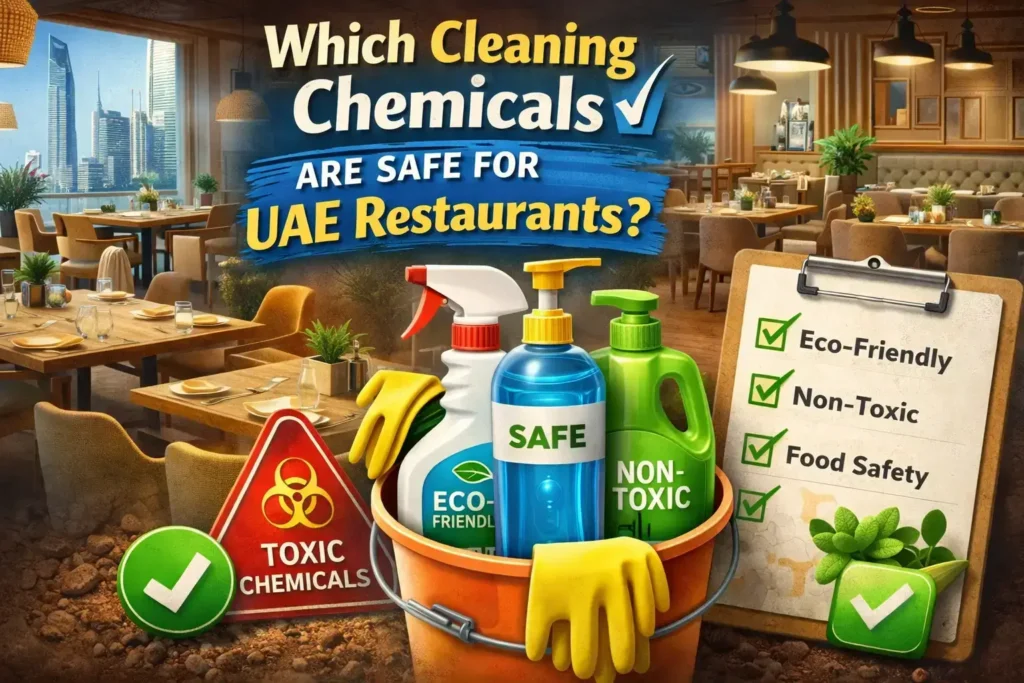
Running a restaurant in the UAE means following strict hygiene standards. But with so many cleaning products available, it can be hard to know which ones are truly safe for food environments.
Using the wrong chemicals near food prep surfaces can harm your customers and put your business at risk. UAE authorities, including ADAFSA and Dubai Municipality, require restaurants to follow strict food safety and hygiene regulations.
This guide by Kemtech Hygiene Concepts covers the safest, UAE-approved cleaning chemicals for restaurants and how to use them correctly.
What Cleaning Chemicals Are Safe for UAE Restaurants?
Safe cleaning chemicals for UAE restaurants include food-grade sanitizers (like quaternary ammonium compounds), diluted chlorine-based solutions, and enzymatic cleaners. These are approved for food contact surfaces when used at correct dilutions. Always rinse surfaces before food contact and follow UAE municipality guidelines.
Why Choosing the Right Restaurant Cleaning Chemicals Matters in the UAE
The UAE has one of the strictest food safety frameworks in the region. Regulatory bodies like Dubai Municipality, Abu Dhabi Agriculture & Food Safety Authority (ADAFSA), and Sharjah Municipality regularly inspect food businesses.
Using unsafe or unapproved chemicals can lead to:
- Heavy fines or closure orders from health authorities
- Food contamination risks affecting customer health
- Damage to expensive kitchen equipment and surfaces
- Loss of food safety certification and business reputation
Choosing certified, food-safe cleaning products keeps your restaurant compliant, your team safe, and your customers protected.
Types of Cleaning Chemicals Safe for UAE Restaurants
1. Food-Grade Sanitizers
These are designed to reduce bacteria and pathogens on food contact surfaces such as chopping boards, counters, and utensils. Common options include:
- Quaternary Ammonium Compounds (Quats): Effective against a wide range of bacteria and viruses. Safe for food surfaces when used at proper dilution.
- Iodine-Based Sanitizers (Iodophors): Used in low concentrations, effective against many pathogens, and leave minimal residue.
- Chlorine-Based Sanitizers: Fast-acting and widely used; safe on food surfaces when diluted correctly (typically 50–200 ppm).
2. Enzymatic Cleaners
Enzymatic cleaners use natural biological enzymes to break down grease, protein, and organic matter. They are:
- Biodegradable and eco-friendly
- Safe for use on kitchen floors, drains, and grease traps
- Effective for odor control without harsh chemicals
- Popular in UAE hotel kitchens and large food operations
3. Food-Safe Grade Degreasers
Heavy-duty kitchen degreasers remove built-up grease from grills, ovens, and fryers. Look for:
- pH-neutral or mildly alkaline formulas approved for food environments
- NSF International-certified or equivalent certification
- Products that require rinsing before food preparation resumes
4. Disinfectants for Non-Food Contact Surfaces
Floors, walls, restrooms, and waste areas need stronger disinfection. Approved products include:
- Hydrogen peroxide-based disinfectants: Effective and environmentally friendly
- Alcohol-based surface sprays: Suitable for high-touch areas like door handles and POS terminals
- Phenolic disinfectants: Used in back-of-house areas and restrooms; not for food surfaces
Is Bleach Safe to Use in UAE Restaurants?
Only when used correctly. Bleach (sodium hypochlorite) is a common and effective disinfectant. However, improper use can be dangerous.
Safe Bleach Use Guidelines:
- Dilute bleach to 50–200 ppm for food contact surfaces
- Never mix bleach with ammonia or acidic cleaners — this creates toxic fumes
- Always rinse food contact surfaces thoroughly after applying bleach solution
- Store bleach away from heat and direct sunlight
- Use gloves and ensure good ventilation when applying
Many UAE restaurants use diluted bleach for sanitizing prep counters, sinks, and cutting boards. It is affordable, widely available, and effective — when used safely.
What Do UAE Restaurants Use to Disinfect Tables?
Table surfaces in dining areas are high-contact zones. The safest and most common products used include:
- Quaternary ammonium (Quat) spray solutions: Fast-drying, no-rinse formulas approved for use on table surfaces
- Alcohol-based surface wipes or sprays (70% ethanol): Quick to apply between customer seatings
- Hydrogen peroxide sprays: Effective and safe; leave no toxic residue
- Diluted hypochlorite solution: Used widely in casual dining and food courts
Most UAE food safety guidelines recommend applying disinfectant, leaving it for the contact time stated on the label, and wiping dry before the next customer is seated.
Benefits of Using Approved Cleaning Chemicals in UAE Restaurants
Using the right food safe cleaning chemicals keeps your UAE restaurant compliant with Dubai Municipality and ADAFSA standards. They protect customers from contamination, reduce inspection risks, and maintain a hygienic kitchen environment.
- Stay compliant with Dubai Municipality and ADAFSA food safety standards
- Protect your customers from foodborne illnesses and cross-contamination
- Reduce risk of failed hygiene inspections and penalties
- Extend the lifespan of kitchen equipment and surfaces
- Build trust with customers by maintaining visibly clean, safe environments
- Support eco-friendly and sustainable operations with biodegradable options
Common Restaurant Disinfectants at a Glance
| Chemical | Food Safe? | Best Use | Rinse Needed? |
| Chlorine (Bleach) | Yes (diluted) | Counters, boards, sinks | Yes |
| Quat Ammonium | Yes (no-rinse) | Tables, surfaces | No |
| Hydrogen Peroxide | Yes | High-touch areas | No |
| Enzymatic Cleaner | Yes | Drains, grease traps | Yes |
| Phenolic Disinfectant | No | Floors, restrooms | Yes |
| Alcohol (70% Ethanol) | Yes | Spot disinfection | No |
Conclusion
Choosing the right cleaning chemicals is not just a hygiene decision it is a legal and business responsibility in the UAE. The right food-safe sanitizers, degreasers, and disinfectants protect your customers, your team, and your restaurant license.
From chlorine-based sanitizers to enzymatic drain cleaners, every product you use in your kitchen needs to meet UAE food safety standards. Train your staff, follow correct dilution guidelines, and always choose certified products.
At Kemtech Hygiene Concepts, we supply a full range of food-safe cleaning chemicals trusted by restaurants, hotels, and catering businesses across the UAE Contact us today for a free consultation and product recommendation tailored to your restaurant’s needs.
Frequently Asked Questions (FAQs)
What chemicals are used in restaurants?
Restaurants commonly use sanitizers, degreasers, enzymatic cleaners, and disinfectants. These include chlorine solutions, quaternary ammonium compounds, and hydrogen peroxide-based products approved for food service environments.
What cleaning chemicals are food-safe?
Food-safe chemicals include NSF-certified sanitizers, diluted bleach solutions (50–200 ppm), iodophors, and no-rinse quat ammonium sprays. Always check product labels to confirm food contact surface approval.
Is bleach safe to use in restaurants?
When diluted correctly. Use bleach at 50–200 ppm on food contact surfaces, always rinse after application, and never mix it with ammonia or acid-based cleaners to avoid toxic reactions.
What do restaurants use to disinfect tables?
Most UAE restaurants use no-rinse quat ammonium sprays, 70% alcohol wipes, or diluted hydrogen peroxide to disinfect dining tables quickly and safely between customer seatings.
Do UAE restaurants need to use certified cleaning products?
Dubai Municipality and ADAFSA recommend using products with recognized certifications such as NSF, HACCP-compatible, or CE-approved labels to ensure compliance with UAE food safety regulations.
How often should restaurants in UAE sanitize food surfaces?
Food contact surfaces should be cleaned and sanitized after every use, between handling different food types, and at the start and end of each shift, as per UAE food safety hygiene standards.