Keeping spaces clean is not just about appearance it is about health, safety, and protection. Whether you manage a home, restaurant, hospital, or office in the UAE, using the right cleaning and sanitizing chemicals makes all the difference. The wrong product can leave behind harmful bacteria, damage surfaces, or create safety risks.
The right one removes germs effectively, keeps surfaces safe, and meets local hygiene standards. This guide walks you through the most common chemicals used in cleaning and sanitizing, how they work, where to use them, and what to avoid. By the end, you will have a clear roadmap for smarter hygiene choices.
What Are the Common Chemicals Used in Cleaning and Sanitizing?
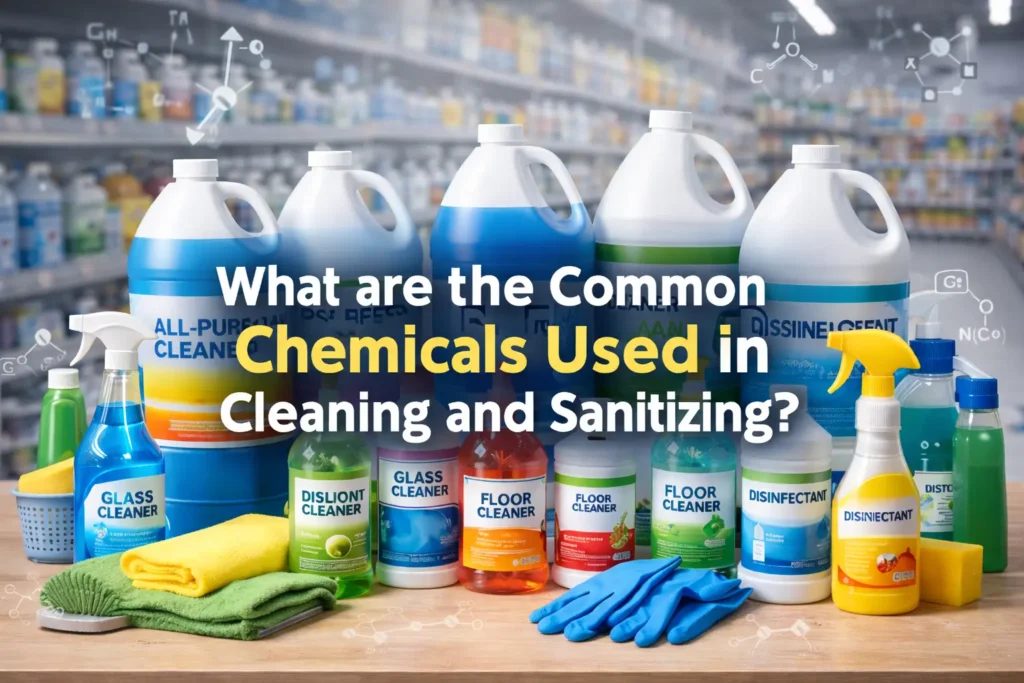
The most common chemicals used in cleaning and sanitizing include sodium hypochlorite (bleach), hydrogen peroxide, quaternary ammonium compounds, isopropyl alcohol, chlorhexidine, and peracetic acid. Each targets specific pathogens and surfaces, making them essential tools in household, commercial, and industrial hygiene programs across the UAE.
Cleaning vs. Sanitizing: Why the Difference Matters
Many people use these words interchangeably but they mean very different things.
Cleaning: removes visible dirt, dust, grease, and organic matter from surfaces.
Sanitizing: reduces the number of microorganisms to a safe level.
In most UAE facilities from hotels to food prep areas both steps are required. You must clean first, then sanitize. Using a sanitizer on a dirty surface reduces its effectiveness significantly.
Common Chemicals Used in Cleaning and Sanitizing
1. Sodium Hypochlorite (Bleach)
Bleach is one of the most widely used disinfectants in the world. It is highly effective against bacteria, viruses, and fungi.
- Works against E. coli, Salmonella, and coronaviruses
- Ideal for kitchens, bathrooms, and hard floors
- Dilute correctly typically 0.1% to 0.5% for general use
- Never mix with ammonia or acids creates toxic fumes
2. Hydrogen Peroxide
Hydrogen peroxide is a powerful oxidizing agent used in hospitals and food manufacturing. It breaks down into water and oxygen, leaving no harmful residue.
- Effective against bacteria, viruses, spores, and biofilms
- Available in 3% (household) to 35% (industrial) concentrations
- Safe for food contact surfaces when properly diluted
- Popular in UAE healthcare facilities and laboratories
3. Quaternary Ammonium Compounds (Quats)
Quats are non-corrosive, long-lasting disinfectants used in hotels, offices, retail stores, and schools. They leave a residual antimicrobial layer after application.
- Effective against bacteria and enveloped viruses
- Found in surface sprays, floor cleaners, and sanitizing wipes
- Low toxicity suitable for frequent use in public spaces
- Must be used at the correct concentration
4. Isopropyl Alcohol (IPA)
Isopropyl alcohol at 70% concentration is one of the fastest-acting sanitizers available. It evaporates quickly, ideal for surfaces that cannot stay wet.
- Best for electronics, medical equipment, and lab surfaces
- Effective against bacteria, fungi, and many viruses
- Not suitable for large areas due to flammability
- Widely used in hand sanitizers across UAE workplaces
5. Chlorhexidine Gluconate
Chlorhexidine is a medical-grade antiseptic used in healthcare and dental settings. It provides a strong residual effect after application.
- Used for skin and wound sanitization
- Common in surgical hand scrubs and pre-operative prep
- Effective against Gram-positive and Gram-negative bacteria
- Not recommended for general surface cleaning
6. Peracetic Acid (PAA)
Peracetic acid is used in food processing, breweries, and water treatment. It is fast-acting even at low temperatures.
- Kills bacteria, yeast, mold, and spores rapidly
- Widely used in UAE food manufacturing and beverage industries
- Works effectively even in the presence of organic matter
- Requires careful handling corrosive at higher concentrations
7. Sodium Hydroxide (Caustic Soda)
Sodium hydroxide is a strong alkaline chemical used for removing heavy grease, fats, and protein buildup in commercial kitchens.
- Highly effective for drain cleaning and degreasing
- Used in CIP systems in food and beverage processing
- Requires proper PPE gloves, goggles, protective clothing
- Not suitable for domestic use without professional training
Chemical Comparison: Which One Is Right for You?
| Chemical | Best Use | Key Strength |
| Sodium Hypochlorite | Hospitals, kitchens, surfaces | Broad-spectrum disinfectant |
| Hydrogen Peroxide | Medical & food industries | Eco-friendly, no residue |
| Quaternary Ammonium | Offices, hotels, retail | Long-lasting surface action |
| Isopropyl Alcohol | Electronics, skin sanitizing | Fast-acting, no rinse needed |
| Chlorhexidine | Healthcare, dental clinics | Residual antimicrobial effect |
| Peracetic Acid | Food processing, breweries | Effective at low temperatures |
Step-by-Step: How to Use Cleaning and Sanitizing Chemicals Correctly
- Remove loose dirt and debris from the surface first
- Apply the appropriate cleaning agent and scrub thoroughly
- Rinse the surface with clean water
- Apply the sanitizing chemical evenly
- Allow proper contact time do not wipe off too soon
- Ventilate the area during and after application
- Store all chemicals in labeled, sealed containers away from children
Benefits of Using the Right Cleaning Chemicals
Working with trusted chemical cleaning suppliers to ensure you get products that are safe, certified, and effective for your specific environment.
- Significantly reduces the spread of infections and diseases
- Helps UAE businesses comply with HACCP and health authority standards
- Extends the lifespan of equipment and surfaces
- Creates a safer environment for staff, customers, and residents
- Reduces cross-contamination in food prep and healthcare settings
- Supports hygiene audits and professional certifications
Cost and Pricing Factors in the UAE
- Type of chemical: Specialized products like peracetic acid cost more than basic bleach.
- Concentration level: Industrial concentrates are more cost-effective per litre but require dilution.
- Volume purchased: Bulk buying significantly reduces per-unit cost for businesses.
- Certification: UAE or EPA-approved products may carry a small premium.
- Application format: Ready-to-use sprays cost more per litre than concentrates.
Common Mistakes to Avoid
- Mixing chemicals: bleach + ammonia produces toxic chloramine gas
- Wrong dilution: too weak means no disinfection; too strong damages surfaces
- Skipping the cleaning step: organic matter blocks sanitizers from working
- Ignoring contact time: wiping too soon drastically reduces effectiveness
- Using one chemical everywhere: not all products are safe for food contact areas
- Unmarked containers: a serious safety and compliance hazard
- No PPE: gloves, masks, and goggles are essential for chemical safety
Conclusion
Understanding the common chemicals used in cleaning and sanitizing is the foundation of any strong hygiene program. Whether you manage a home in Dubai, a restaurant in Abu Dhabi, or a hospital anywhere in the UAE the right chemical protects people, ensures compliance, and keeps your environment truly clean.
At Kemtech Hygiene Concepts, we supply high-quality, industry-approved cleaning and sanitizing chemicals across the UAE. Whether you manage a home, office, hotel, hospital, or food facility our experts will guide you to the right product for maximum hygiene and safety.
Contact Kemtech Hygiene Concepts today and keep your spaces clean, safe, and fully compliant.
Frequently Asked Questions (FAQs)
Which chemical is commonly used for cleaning?
Sodium hypochlorite (bleach) and quaternary ammonium compounds are the most commonly used chemicals for cleaning. They are affordable, widely available, and effective against a broad range of bacteria and viruses in UAE homes and commercial facilities.
What is the most powerful chemical disinfectant?
Peracetic acid and sodium hypochlorite are among the most powerful disinfectants available. They eliminate bacteria, viruses, spores, and fungi effectively. In healthcare and food processing environments, peracetic acid is especially valued for its speed and broad-spectrum performance.
Are cleaning chemicals safe for food preparation areas?
Yes, but only the correct product at the right dilution. Hydrogen peroxide and quaternary ammonium compounds are approved for food contact surfaces. Always verify the product meets UAE food safety and HACCP guidelines before using it in any kitchen or food processing area.
How often should sanitizing chemicals be applied in commercial spaces?
High-touch surfaces should be sanitized at least twice daily more during peak hours. Food prep surfaces must be sanitized before and after every use. Always follow your facility hygiene protocol and local UAE health authority requirements for best results.
Can I mix different cleaning chemicals to increase strength?
No, mixing of chemicals is extremely dangerous. Bleach combined with ammonia creates chloramine gas. Bleach mixed with acid produces chlorine gas. Always use one product at a time, follow dilution instructions carefully, and never combine products unless the manufacturer explicitly states it is safe.
What chemicals are used in UAE hospitals and healthcare facilities?
UAE hospitals commonly use chlorhexidine gluconate, sodium hypochlorite, hydrogen peroxide, and isopropyl alcohol. These chemicals meet MOH and Dubai Health Authority infection control standards and are highly effective against healthcare-associated infections.