

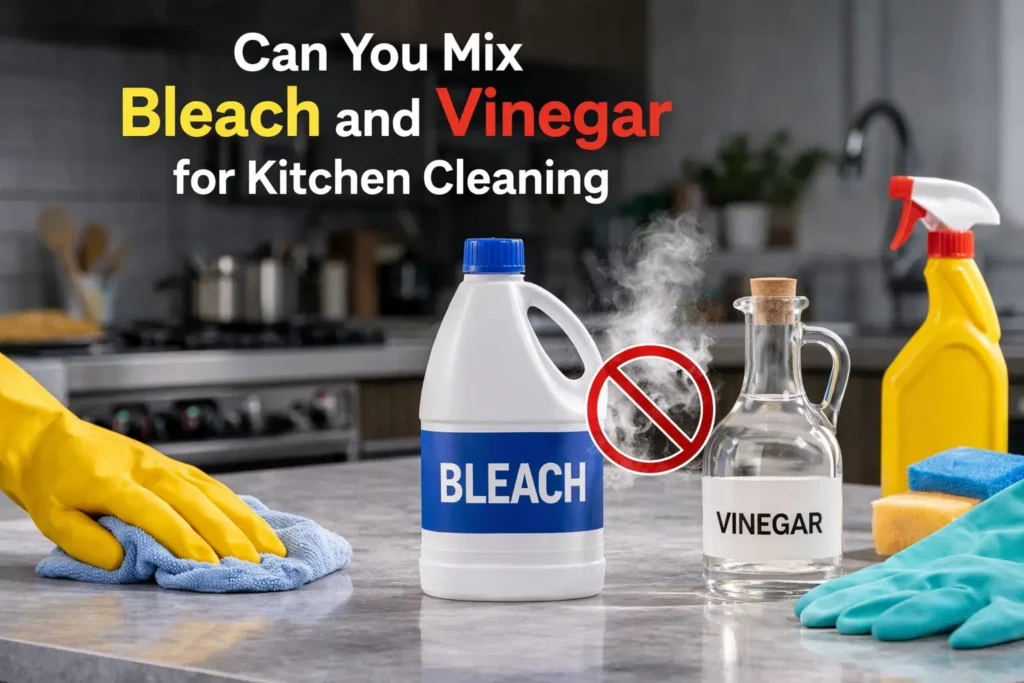
You cannot mix bleach and vinegar for kitchen cleaning in Dubai or anywhere else. Combining sodium hypochlorite (bleach) with acetic acid (vinegar) produces chlorine gas, a toxic substance that causes respiratory damage, eye irritation, and chemical burns. Each product is effective as a standalone cleaner, but mixing them creates a dangerous chemical reaction that poses serious health risks in enclosed kitchen spaces.
Quick Answer
- Never mix bleach and vinegar; they produce toxic chlorine gas.
- Use bleach for disinfecting surfaces, vinegar for cutting grease and mineral deposits.
- Apply one product, rinse thoroughly, then use the other if needed.
- Ventilate your kitchen fully before and during any bleach-based cleaning.
- If accidental mixing occurs, leave the area immediately and ventilate.
- Use food-safe disinfectants approved by Dubai Municipality for commercial kitchens.
- Contact Kemtech Hygiene Concepts for professional kitchen cleaning in Dubai.
What Is the Bleach and Vinegar Mixing Danger?
The bleach and vinegar mixing danger refers to the toxic chemical reaction that occurs when sodium hypochlorite (household bleach, 3–8% concentration) contacts acetic acid (white vinegar, 5–8% concentration). The reaction releases chlorine gas (Cl₂) and chloramine vapours within seconds of contact. Chlorine gas is classified as a chemical weapon at high concentrations and a serious respiratory hazard at the levels produced in home kitchens. Exposure to chlorine gas causes coughing, shortness of breath, chest tightness, watery eyes, and chemical burns to the throat and lungs.
Dubai’s enclosed kitchen environments with limited natural ventilation and high ambient temperatures accelerate gas accumulation, making this combination especially dangerous in the UAE context. The same danger applies to mixing bleach with ammonia, rubbing alcohol, or hydrogen peroxide. Never combine bleach with any other cleaning product unless the product label explicitly states it is safe to do so.
What You Need for Safe Kitchen Cleaning in Dubai
Use these products and tools separately never together:
- For disinfection: Sodium hypochlorite bleach solution (diluted to 1,000 ppm for food-contact surfaces per Dubai Municipality guidelines)
- For grease and limescale: White distilled vinegar (5% acidity) or citric acid-based cleaner
- Spray bottles: label each clearly with the product name
- Microfibre cloths: colour-coded (separate cloths for bleach vs. acid-based cleaners)
- Rubber gloves: (nitrile, minimum 0.15mm thickness)
- Safety goggles: for bleach application
- Ventilation: Open windows, exhaust fans running at full speed
- Timer: for rinse intervals between products
Bleach and Vinegar Kitchen Cleaning Guide
Ventilate the Kitchen Completely
Open all windows and doors before starting. Switch on the exhaust fan at maximum speed. In Dubai’s climate, kitchen temperatures regularly exceed 35°C, which increases the volatility of cleaning chemicals. Allow air to circulate for at least 5 minutes before applying any product. Never clean a sealed kitchen with bleach-based products.
Remove All Food, Utensils, and Dishes
Clear every food item, cutting board, utensil, and plate from the surfaces you plan to clean. Bleach residue on food-contact surfaces contaminates food and poses ingestion risks. Place items in a separate room or covered container before beginning.
Clean with Vinegar First (Grease and Mineral Deposits)
Apply white distilled vinegar or a citric acid-based spray directly to greasy surfaces, stovetops, and areas with limescale buildup. Dubai’s hard water (TDS levels of 200–500 ppm in many areas) causes significant mineral deposits on kitchen surfaces. Let the vinegar sit for 5–10 minutes to dissolve grease and scale. Wipe with a microfibre cloth and rinse the surface thoroughly with clean water. Allow the surface to dry completely before proceeding to the next step.
Rinse All Surfaces with Water
After removing vinegar, rinse every treated surface with fresh water at least twice. This step is critical any vinegar residue left on the surface will react with bleach in the next step. Use a clean damp cloth to wipe surfaces and allow 5–10 minutes of drying time. Do not skip this rinse step under any circumstances.
Apply Bleach Solution for Disinfection
Prepare a diluted bleach solution at 1,000 ppm (approximately 20ml of 5% bleach per litre of water) for food-contact surfaces, as specified by Dubai Municipality’s Food Safety Department guidelines. Apply the solution using a clearly labelled spray bottle. Let it sit for 1–2 minutes contact time to kill bacteria, viruses, and fungi. Do not rinse food-contact surfaces after bleach application; the residual disinfectant continues working and is safe at approved concentrations. Rinse non-food surfaces (floors, walls) after a 5-minute contact time.
Dispose of Cloths and Wash Hands
Place used bleach cloths in a separate bag for disposal or laundering. Never reuse a bleach-saturated cloth for vinegar cleaning. Remove gloves by turning them inside out and dispose or wash them. Wash hands with soap and water for at least 20 seconds. Ventilate the kitchen for a further 15 minutes after cleaning is complete.
Bleach vs. Vinegar for Kitchen Cleaning: At a Glance
| Factor | Bleach (Sodium Hypochlorite) | Vinegar (Acetic Acid) |
| Primary Use | Disinfection, killing pathogens | Grease removal, limescale |
| Dilution Rate | 20ml per litre (1,000 ppm) | Undiluted or 50/50 with water |
| Contact Time | 1–2 minutes | 5–10 minutes |
| Rinse Required | No (food surfaces) / Yes (floors) | Yes, always |
| Safe to Mix With | Water only | Water only |
| Dubai Municipality Approved | Yes (food establishments) | Yes (general use) |
| Frequency of Use | Weekly disinfection | Daily or as needed |
How Long Does Safe Kitchen Cleaning Take?
A complete safe kitchen cleaning session using bleach and vinegar separately takes 45–60 minutes for a standard Dubai home kitchen. The vinegar degreasing stage takes 15–20 minutes including dwell time. The rinse and dry stage requires 10 minutes.
The bleach disinfection stage takes 10–15 minutes. Post-cleaning ventilation adds another 15 minutes. Rushing the rinse stage between products is the most common cause of accidental chemical mixing and always allows full drying time between applications.
How Often Should You Clean Your Kitchen with These Products?
- Daily: Wipe surfaces with vinegar spray to remove grease and food residue.
- Weekly: Full bleach disinfection of countertops, sink, and high-touch surfaces.
- Monthly: Deep clean with vinegar for limescale on taps, tiles, and appliances.
- After raw meat handling: Immediate bleach disinfection of all contact surfaces.
- Quarterly: Professional deep cleaning service for commercial kitchens in Dubai.
Conclusion
You cannot mix bleach and vinegar for kitchen cleaning in Dubai. The combination produces toxic chlorine gas that endangers everyone in space. Use each product separately, rinse surfaces thoroughly between applications, and always ventilate your kitchen during and after cleaning. Follow Dubai Municipality’s dilution guidelines for bleach on food-contact surfaces to stay compliant and protect your household or business.
For professional Kitchen Cleaning in Dubai that meets all UAE food safety standards, contact Kemtech Hygiene Concepts. Kemtech Hygiene Concepts delivers certified deep cleaning services for residential and commercial kitchens across Dubai, using only approved, non-toxic cleaning protocols.
Frequently Asked Questions (FAQ)
What happens if you accidentally mix bleach and vinegar while cleaning your kitchen?
Accidentally mixing bleach and vinegar produces chlorine gas immediately upon contact. Leave the area at once, move to fresh air, and ventilate the kitchen fully by opening all windows and running the exhaust fan. If you experience breathing difficulty, eye pain, or chest tightness, seek medical attention at the nearest UAE hospital emergency department.
Can you clean a Dubai kitchen thoroughly in one session without mixing bleach and vinegar?
A complete Dubai kitchen clean in one session is achievable by applying vinegar first for grease, rinsing fully, drying for 5–10 minutes, then applying bleach for disinfection. The full process takes 45–60 minutes. Never skip the rinse stage between products residual acid from vinegar reacts with bleach even in small amounts.
What are the best safe alternatives to mixing bleach and vinegar for kitchen disinfection?
The best safe alternatives to mixing bleach and vinegar are hydrogen peroxide (3% solution), quaternary ammonium (quat) disinfectant sprays, or citric acid-based all-purpose cleaners. These products clean and disinfect in a single application without chemical mixing risks. Dubai Municipality approves several commercial quat-based products for food establishment use.
What is the most common mistake people make when using bleach and vinegar in the kitchen?
The most common mistake when using bleach and vinegar in the kitchen is applying one product immediately after the other without rinsing in between. Even trace amounts of vinegar residue on a surface react with bleach to release chlorine gas. Always rinse with water and allow surfaces to dry completely before switching between the two products.
What should you do first when starting a kitchen cleaning session in Dubai?
The first step in any kitchen cleaning session in Dubai is ventilating the space by opening windows, running the exhaust fan, and removing all food and utensils from the area. Ventilation prevents chemical vapour buildup from any cleaning product, not just bleach. Proper airflow also accelerates drying time between product applications, reducing the risk of accidental chemical mixing.