Maintaining a clean and hygienic environment is not just a preference, it is a health and safety requirement. Whether you manage a restaurant in Dubai, a hospital in Abu Dhabi, or a home in Sharjah, using the right cleaning and sanitizing equipment makes all the difference.
In the UAE, hygiene standards are strictly enforced across industries. Businesses that fail to meet compliance requirements risk fines, closures, and reputational damage. That is why investing in proper hygiene equipment is a smart, long-term decision.
This guide explains what cleaning and sanitizing equipment is, the types available, how to use it correctly, and what to look for when choosing the best solutions for your needs in the UAE.
What Is Cleaning and Sanitizing Equipment?
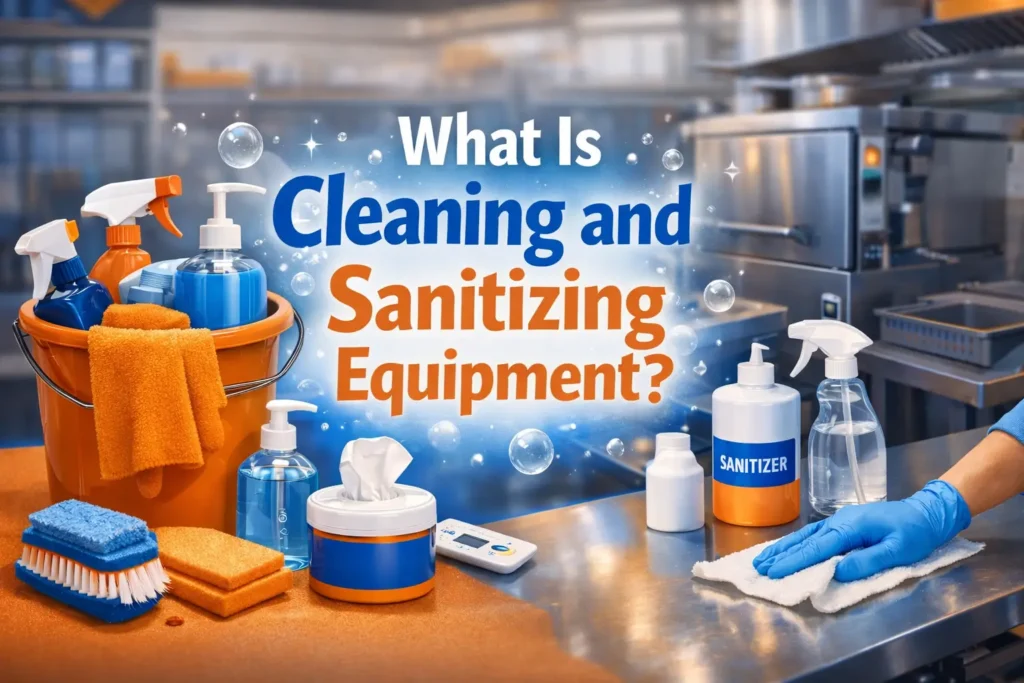
Cleaning and sanitizing equipment refers to tools and machines used to remove dirt, grease, and harmful microorganisms from surfaces and objects. Cleaning removes visible debris, while sanitizing reduces bacteria and pathogens to safe levels. Together, they protect health, ensure hygiene compliance, and maintain safe environments in homes, restaurants, hospitals, and industrial facilities across the UAE.
Cleaning and sanitizing equipment includes any tool, machine, or chemical system designed to remove contamination from surfaces, objects, or environments.
The two processes work together but serve different purposes:
- Cleaning: Physically removes dirt, dust, grease, and food residue from a surface.
- Sanitizing: Reduces the number of bacteria, viruses, and pathogens to a safe, acceptable level.
Neither process replaces the other. For full hygiene protection, both steps must be performed in the correct order. This two-step approach is the foundation of hygiene compliance in food service, healthcare, and hospitality settings.
Types of Cleaning and Sanitizing Equipment
1. Manual Cleaning Tools
These are the most basic tools used for everyday cleaning tasks:
- Scrub brushes and sponges for surface scrubbing
- Mops and buckets for floor cleaning
- Microfiber cloths for dusting and wiping
- Squeegees for glass and smooth surfaces
Manual tools are cost-effective and widely used in homes and small businesses across the UAE.
2. Mechanical Cleaning Machines
These powered machines are ideal for commercial and industrial environments:
- Floor scrubbers: Clean and dry floors in large areas simultaneously
- Pressure washers: Remove stubborn dirt and grime from outdoor surfaces
- Steam cleaners: Use hot steam to clean and sanitize without chemicals
- Vacuum cleaners: Industrial-grade suction for carpets, upholstery, and vents
3. Sanitizing and Disinfection Equipment
These tools are specifically designed to kill or reduce microorganisms:
- UV sanitizing lamps: kill bacteria and viruses using ultraviolet light
- Fogging machines: spray disinfectant mist in large spaces
- Electrostatic sprayers: coat surfaces evenly with disinfectant
- Sanitizing tunnels: used at building entrances for full-body disinfection
4. Dishwashing and Kitchen Sanitizing Equipment
For restaurants, cafeterias, and food businesses:
- Commercial dishwashers with high-temperature rinse cycles
- Glass washers for bar and hospitality settings
- Pot washers for heavy-duty kitchen utensil cleaning
- Three-compartment sinks for manual wash, rinse, and sanitize cycles
Cleaning vs. Sanitizing vs. Disinfecting: What Is the Difference?
| Aspect | Cleaning | Sanitizing / Disinfecting |
| Purpose | Removes visible dirt and debris | Kills or reduces harmful microorganisms |
| Method | Water, detergent, physical scrubbing | Chemical agents, UV light, heat, steam |
| Result | Visually clean surface | Microbiologically safe surface |
| Required first? | Yes — always clean before sanitizing | No — must follow cleaning step |
| Best for | General daily maintenance | Food prep, medical, high-touch areas |
Step-by-Step Process: How to Clean and Sanitize Equipment Properly
- Pre-rinse or scrape: Remove loose food particles, dust, or debris before cleaning.
- Apply cleaning agent: Use the appropriate detergent. Follow dilution instructions.
- Scrub and agitate: Use brushes, cloths, or mechanical tools to loosen all contamination.
- Rinse thoroughly: Remove all soap and cleaning residue with clean water.
- Apply sanitizer: Use an approved sanitizing solution, UV system, or heat method.
- Allow to air dry: Do not wipe dry with a cloth, as this can recontaminate surfaces.
- Inspect and document: Check surfaces and record the process for compliance purposes.
This seven-step sequence is recommended by UAE food safety authorities and standards such as HACCP and ISO 22000.
Key Benefits of Using Proper Cleaning and Sanitizing Equipment
Using the right cleaning and sanitizing equipment to keep your workplace safe, hygienic, and fully compliant with UAE health regulations. It protects your staff, customers, and business reputation every single day.
- Protects public health by reducing the spread of bacteria, viruses, and allergens
- Ensures regulatory compliance with UAE food safety and municipality standards
- Extends the life of commercial kitchen equipment, floors, and surfaces
- Improves staff efficiency with professional-grade machines
- Builds customer trust — visibly clean environments boost confidence
- Reduces liability risks associated with foodborne illness or hygiene incidents
- Supports sustainability when using eco-friendly and water-efficient machines
Cost and Pricing Factors in the UAE
Type of Equipment
Manual tools are affordable. Industrial machines like floor scrubbers and fogging machines require a higher investment.
Brand and Quality
Established brands cost more but offer better durability, warranty support, and compliance certifications.
Business Scale
A small cafe needs basic equipment. A hotel or hospital requires high-capacity systems — which increases the total budget.
Maintenance and Consumables
Factor in ongoing costs such as cleaning chemicals, replacement parts, filters, and periodic servicing.
Common Mistakes to Avoid
- Skipping the cleaning step before sanitizing sanitizer cannot work on dirty surfaces
- Using the wrong dilution ratios too weak means no effect; too strong can be hazardous
- Reusing dirty cloths and mops this spreads contamination instead of removing it
- Not following contact time requirements sanitizers need set time to be effective
- Ignoring equipment maintenance worn parts reduce cleaning effectiveness
- Using the same tools for different areas always use colour-coded equipment
- Failing to train staff even the best equipment delivers poor results without proper training
Choose the Right Cleaning and Sanitizing Equipment
Cleaning and sanitizing equipment is the backbone of safe, compliant, and healthy environments whether at home, in a restaurant, a hospital, or a commercial facility across the UAE.
Using the right tools, following the correct process, and maintaining your equipment consistently are what separate truly hygienic spaces from simply clean-looking ones.
Choosing the right Cleaning and sanitizing equipment with Kemtech Hygiene Concepts for commercial use depends on your industry, facility size, and compliance requirements
Frequently Asked Questions (FAQs) About Cleaning and Sanitizing Equipment
What is the difference between cleaning and sanitizing equipment?
Cleaning removes visible dirt and grease using detergents and physical action. Sanitizing uses chemical agents or heat to kill harmful bacteria and viruses. Both steps are required for full hygiene protection in any food or healthcare environment.
What sanitizing equipment is used in UAE restaurants?
UAE restaurants commonly use commercial dishwashers, three-compartment sinks, electrostatic sprayers, and chemical sanitizing solutions. All equipment must comply with Dubai Municipality and UAE food safety regulations to maintain hygiene standards.
Can I use the same equipment for cleaning and sanitizing?
Some multi-function machines like steam cleaners combine both processes. However, in most commercial settings, separate tools are used to ensure each step is done correctly and to prevent cross-contamination between surfaces or areas.
How often should cleaning and sanitizing equipment be maintained?
Daily inspection and cleaning is recommended. Deep maintenance depends on usage and manufacturer guidelines typically weekly or monthly. Regular maintenance prevents breakdowns and ensures consistent hygiene performance in commercial facilities.
Is professional hygiene equipment suitable for UAE homes?
Yes. Compact steam cleaners, UV sanitizers, and high-efficiency vacuums are ideal for UAE homes. They offer superior results compared to basic household tools and are especially useful in large villas or homes with children or allergy concerns.
What are hygiene compliance requirements for UAE businesses?
UAE businesses must follow guidelines from Dubai Municipality, ADAFSA, and relevant health authorities. Requirements include using approved equipment, maintaining records, training staff, and passing regular hygiene inspections.