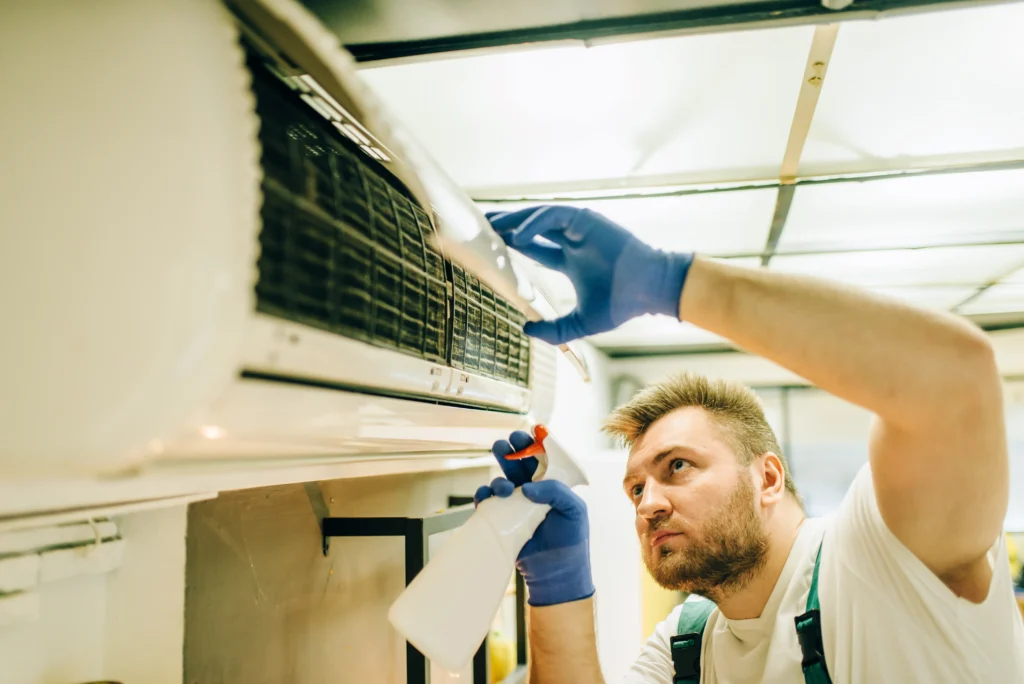
Air conditioning systems are the lifeline of comfort in UAE’s scorching climate, but dirty coils can reduce efficiency by up to 40%. Choosing the right chemical cleaner is crucial for maintaining optimal performance and extending your AC’s lifespan.
Whether you’re a homeowner looking to maintain your unit or a business owner managing multiple systems, understanding proper coil cleaning chemicals prevents costly repairs and ensures consistent cooling.
Kemtech Hygiene Concepts brings you this comprehensive guide to help you make informed decisions about AC coil maintenance using professional-grade solutions that deliver results.
What’s your biggest concern about AC maintenance? Let me provide you with the expert answers you need.
What Chemical to Use to Clean AC Coils?
Use alkaline-based coil cleaners (pH 10-12) for condenser coils with grease buildup, acidic cleaners (pH 3-4) for mineral deposits, or no-rinse foaming detergents for evaporator coils. Always choose pH-balanced, biodegradable formulas safe for aluminum fins.
Understanding AC Coil Cleaning Chemicals
Your air conditioning system contains two essential coil types that require different cleaning approaches.
Evaporator Coils sit inside your indoor unit and absorb heat from your space. These coils operate in humid conditions and accumulate dust, mold, and biological growth.
Condenser Coils are located in the outdoor unit and release heat outside. They face exposure to environmental pollutants, dust, debris, and weather elements.
Best Chemicals for Cleaning AC Coils
1. Professional-Grade Alkaline Cleaners
Alkaline coil cleaners work best for condenser coils with heavy grease and oil buildup.
These formulas typically range from pH 10-12 and effectively cut through organic matter. They’re ideal for outdoor units exposed to environmental pollutants.
Popular alkaline options include:
- Heavy-duty foaming coil cleaners
- Self-rinsing alkaline detergents
- Industrial-strength degreasers
- Biodegradable alkaline solutions
2. Acidic Coil Cleaning Solutions
Acidic cleaners excel at removing mineral deposits, scale, and oxidation from coil surfaces.
With pH levels between 2-4, these solutions dissolve calcium buildup and rust. They’re particularly effective in areas with hard water.
Key acidic cleaner types:
- Phosphoric acid-based cleaners
- Citric acid formulations
- Hydrochloric acid solutions (diluted)
- Multi-acid blend cleaners
3. No-Rinse Coil Cleaners
No-rinse formulas offer convenience for evaporator coils where water access is limited.
These self-evaporating cleaners foam up, penetrate dirt, and drain away through condensate lines. They’re perfect for indoor coils and hard-to-reach areas.
4. Biodegradable and Eco-Friendly Options
Environmental consciousness drives demand for green cleaning solutions that deliver professional results.
Plant-based surfactants and biodegradable compounds protect the environment without compromising cleaning power. These options align with UAE’s sustainability goals.
Benefits of Using Kemtech Coil Cleaning Chemicals
Professional chemical cleaning delivers measurable improvements across multiple performance areas:
- Enhanced Energy Efficiency: Clean coils reduce energy consumption by 15-40%, lowering monthly utility bills significantly
- Improved Cooling Capacity: Restored heat transfer means faster cooling and better temperature control
- Extended Equipment Lifespan: Prevents corrosion and mechanical stress that leads to premature system failure
- Better Air Quality: Eliminates mold, bacteria, and allergens that circulate through your indoor air
- Reduced Repair Costs: Preventive maintenance prevents expensive compressor and component failures
- Consistent Performance: Maintains steady cooling output even during peak demand periods
- Compliance with Warranties: Many manufacturers require regular professional maintenance for warranty validity
- Environmental Benefits: Efficient systems reduce carbon footprint and refrigerant consumption
Common Mistakes to Avoid When Cleaning AC Coils
1. Using Wrong Chemical Types
Applying acidic cleaners on aluminum coils causes corrosion and permanent damage. Always match chemical pH to coil material specifications.
2. Excessive Pressure During Rinsing
High-pressure washing bends delicate aluminum fins, reducing airflow and efficiency. Use gentle water pressure or specialized coil cleaning nozzles.
3. Insufficient Dwell Time
Rushing the process prevents chemicals from breaking down stubborn deposits. Follow manufacturer-recommended contact times for optimal results.
4. Neglecting Safety Protocols
Chemical cleaners contain corrosive substances that harm skin and eyes. Never skip protective equipment or work in poorly ventilated spaces.
5. Mixing Incompatible Chemicals
Combining different cleaning agents creates dangerous reactions and toxic fumes. Use one product at a time and rinse completely between applications.
6. Ignoring Environmental Regulations
Improper chemical disposal harms the environment and violates local regulations. Collect and dispose of chemical runoff according to UAE environmental guidelines.
Maintain Peak AC Performance with Right Chemicals
Selecting appropriate chemicals for AC coil cleaning directly impacts system efficiency, longevity, and indoor air quality. Whether choosing alkaline cleaners for condenser coils, acidic solutions for mineral deposits, or convenient no-rinse formulas for evaporator coils, proper chemical selection makes all the difference.
Looking for reliable AC coil cleaning chemicals? Kemtech Hygiene supplies professional-grade coil cleaners and maintenance chemicals across the UAE. As trusted cleaning chemical suppliers in Dubai, we provide the industry-leading products your facility needs to reduce energy costs and extend AC equipment life.
Contact us today to request a product catalog or quotation for AC coil cleaning chemicals!
Frequently Asked Questions
Can I spray vinegar on AC coils?
Yes, diluted white vinegar (50/50 with water) works for light cleaning and deodorizing evaporator coils. However, vinegar’s mild acidity isn’t strong enough for heavy buildup, grease, or mineral deposits that require professional-grade chemical cleaners for effective removal.
How do professionals clean coils?
Professionals use specialized foaming chemicals matched to coil type and contamination level, applying them with professional sprayers for even coverage. They follow with controlled rinsing, fin straightening, and system testing to ensure optimal performance and prevent damage from improper techniques.
How to clean Air Conditioner coils?
Turn off power, remove debris, apply appropriate chemical cleaner (alkaline for condenser, acidic for heavy deposits), allow proper dwell time, and rinse thoroughly. Use protective equipment, gentle pressure, and follow manufacturer guidelines for your specific coil material and cleaning product.
What are the symptoms of a dirty coil?
Reduced cooling capacity, higher energy bills, longer cooling cycles, ice formation on evaporator coils, warm air from vents, and unusual odors indicate dirty coils. You may also notice increased humidity indoors, frequent system cycling, or complete cooling failure in severely neglected systems.
Which chemical is best for evaporator coils?
No-rinse foaming cleaners or mild alkaline formulas (pH 8-10) work best for evaporator coils due to limited water access. Choose biodegradable options that drain safely through condensate lines without leaving residue that attracts future dirt accumulation.
How often should I chemically clean AC coils?
Clean condenser coils every 3-6 months in UAE’s dusty environment, and evaporator coils annually during professional maintenance. Commercial systems or high-usage environments may require quarterly cleaning to maintain efficiency and prevent premature system failure.