
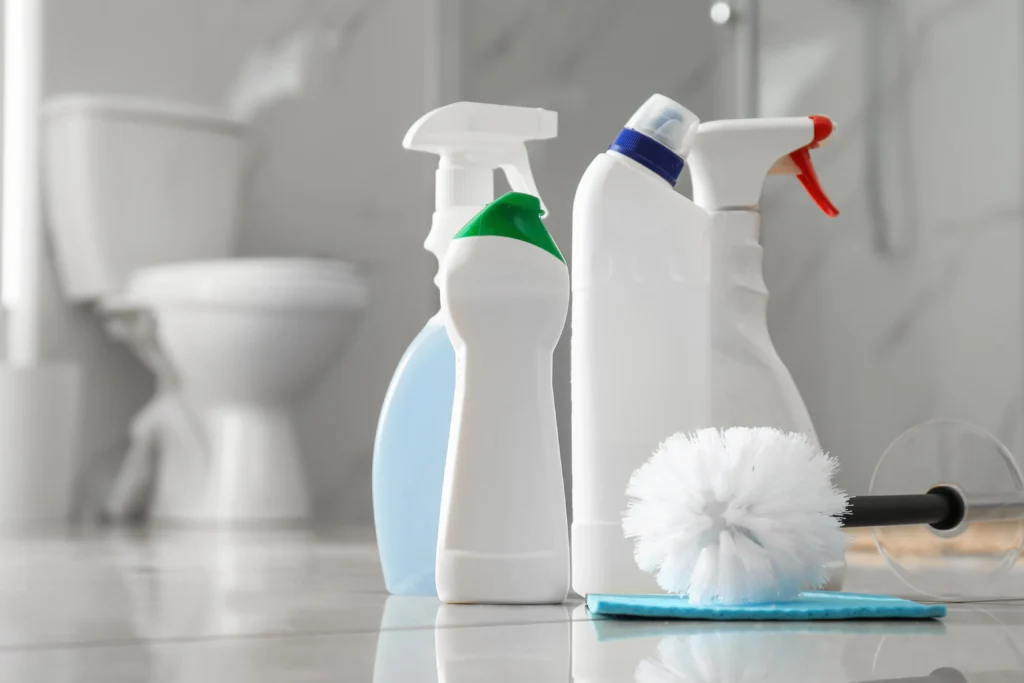
Bathroom cleaning requires specific chemicals to tackle stubborn stains, eliminate bacteria, and keep surfaces spotless. Understanding which products work best helps you maintain hygiene while ensuring family safety.
The UAE’s hard water and humid climate demand specialized cleaning solutions. This guide covers essential bathroom cleaning chemicals, their uses, and safety tips for homeowners and business owners.
Ready to learn which chemicals professionals trust? Let’s dive into the complete breakdown.
What chemicals are commonly used in bathroom cleaning?
Common bathroom cleaning chemicals include sodium hypochlorite (bleach) for disinfection, hydrochloric acid for limescale removal, quaternary ammonium compounds for sanitizing, hydrogen peroxide as an eco-friendly disinfectant, and surfactants for soap scum removal. Professional cleaners also use specialized descalers and enzymatic cleaners.
Types of Bathroom Contaminants
Bathrooms harbor various contaminants that require different chemical treatments:
- Bacteria and viruses – Need disinfectants
- Limescale and mineral deposits – Require acidic cleaners
- Soap scum and body oils – Need alkaline degreasers
- Mold and mildew – Require fungicides
- Organic stains – Need oxidizing agents
Primary Chemicals Used in Professional Bathroom Cleaning
1. Sodium Hypochlorite (Bleach)
Sodium hypochlorite is the most powerful disinfectant for bathrooms. It kills 99.9% of bacteria, viruses, and fungi within minutes.
Bleach works by oxidizing organic matter and breaking down stain molecules. It’s particularly effective for whitening grout and removing mildew stains.
Concentration: Professional products contain 5-10% sodium hypochlorite.
Best for: Toilet bowls, grout lines, and white surfaces.
2. Hydrochloric Acid (HCl)
Hydrochloric acid is the go-to solution for limescale removal. The UAE’s hard water makes this chemical essential for bathroom maintenance.
This acid dissolves calcium carbonate deposits quickly and effectively. It restores shine to faucets, showerheads, and glass surfaces.
Concentration: Toilet bowl cleaners contain 9-12% HCl.
Best for: Stubborn limescale, rust stains, and mineral buildup.
3. Quaternary Ammonium Compounds (Quats)
Quats are multi-purpose disinfectants that are gentler than bleach. They effectively kill bacteria while leaving surfaces residue-free.
These compounds are ideal for daily cleaning and maintenance. They don’t damage colored surfaces or emit strong fumes.
Best for: Countertops, walls, floors, and fixtures.
4. Hydrogen Peroxide
Hydrogen peroxide is an eco-friendly alternative to bleach. It breaks down into water and oxygen, leaving no harmful residue.
This chemical effectively removes stains and kills bacteria. It’s safe for septic systems and environmentally conscious facilities.
Concentration: Cleaning products use 3-6% hydrogen peroxide.
Best for: Green cleaning programs and sensitive environments.
5. Alkaline Cleaners and Degreasers
Alkaline cleaners contain sodium hydroxide or sodium carbonate. They excel at breaking down organic matter and oils.
These products emulsify soap scum and body oils effectively. They’re essential for shower walls and bathtub cleaning.
Best for: Soap scum, body oils, and greasy residues.
6. Enzymatic Cleaners
Enzymatic cleaners use biological catalysts to break down organic waste. They’re particularly effective for drain maintenance and odor control.
These products are safe, non-toxic, and environmentally friendly. They continue working long after application.
Best for: Drains, urinals, and organic stain removal.
Step-by-Step Process for Safe Chemical Use
1. Assess the Cleaning Challenge
Identify the type of stain or contamination before selecting chemicals. Different problems require different solutions.
2. Choose the Right Chemical
Match the chemical to the specific cleaning task. Never mix different chemicals together.
3. Prepare the Area
Ensure proper ventilation by opening windows or activating exhaust fans. Remove personal items from the bathroom.
4. Wear Protective Equipment
Put on gloves, safety glasses, and protective clothing. This prevents skin contact and eye irritation.
5. Dilute According to Instructions
Follow manufacturer guidelines for proper dilution ratios. More concentrated doesn’t mean more effective.
6. Apply and Allow Dwell Time
Apply the chemical and let it work for the recommended time. This ensures maximum effectiveness.
7. Rinse Thoroughly
Remove all chemical residues with clean water. This prevents damage and ensures safety.
8. Ventilate and Dry
Keep the area well-ventilated until completely dry. This removes chemical odors and prevents slip hazards.
Benefits of Kemtech Bathroom Chemicals
Professional cleaning chemicals offer significant advantages over consumer products:
- Superior killing power – Eliminate 99.99% of pathogens effectively
- Faster action – Concentrated formulas work in minutes, not hours
- Cost-effective – Dilutable concentrates last longer and reduce expenses
- Specialized formulations – Targeted solutions for specific problems
- Consistent results – Professional-grade quality ensures reliability
- Safety compliance – Meet UAE health and safety regulations
- Reduced labor time – Powerful formulas cut cleaning time significantly
- Long-lasting protection – Residual effects prevent quick re-soiling
- Improved hygiene standards – Hospital-grade disinfection capabilities
- Better value – Higher concentration means lower per-use cost
Common Mistakes When Using Bathroom Cleaning Chemicals
1. Mixing Different Chemicals
Never mix bleach with acidic cleaners or ammonia. This creates toxic chlorine gas that can be fatal.
Always use one product at a time and rinse thoroughly before switching.
2. Ignoring Dwell Time
Spraying and immediately wiping removes the chemical before it works. Each product needs time to act.
Follow manufacturer instructions for proper contact time.
3. Using Too Much Product
More chemicals don’t mean better cleaning. Excessive amounts waste money and leave residues.
Proper dilution ratios deliver optimal results safely.
4. Poor Ventilation
Using strong chemicals in enclosed spaces causes respiratory irritation. Always ensure adequate airflow.
Open windows and use exhaust fans during and after cleaning.
5. Skipping Protective Equipment
Direct contact with cleaning chemicals causes skin burns and eye damage. Never skip safety gear.
Always wear gloves and eye protection when handling concentrated products.
6. Storing Chemicals Improperly
Heat and sunlight degrade chemical effectiveness. Improper storage creates safety hazards.
Store chemicals in cool, dry places away from direct sunlight.
7. Using Wrong Product for the Task
Acidic cleaners damage natural stone while alkaline products don’t remove limescale. Match chemicals to surfaces.
Read product labels and surface compatibility information carefully.
Keep Your Bathroom Cleans with Right Cleaning Chemicals
Understanding bathroom cleaning chemicals empowers you to maintain hygienic, spotless bathrooms effectively. The right products eliminate bacteria, remove stubborn stains, and protect your surfaces.
Professional-grade chemicals deliver superior results compared to household products. They work faster, last longer, and provide better value for money. Kemtech Hygiene Concepts stands as UAE’s trusted partner for professional bathroom cleaning chemicals and hygiene solutions. With years of experience serving Dubai, Abu Dhabi, and across the Emirates, we understand the unique challenges of maintaining pristine floors in this region.
Common Questions
What is the most effective bathroom disinfectant?
Sodium hypochlorite (bleach) is the most effective bathroom disinfectant, killing 99.9% of bacteria and viruses. For daily use, quaternary ammonium compounds offer excellent disinfection with less harshness.
Can I mix bleach with other cleaning products?
Never mix bleach with acidic cleaners, ammonia, or other chemicals as this creates toxic chlorine gas. Always use products separately and rinse surfaces between different cleaners.
What chemical removes limescale best in bathrooms?
Hydrochloric acid-based cleaners are most effective for removing limescale caused by UAE’s hard water. For maintenance, regular use of acidic cleaners prevents heavy buildup.
Are eco-friendly bathroom chemicals as effective as traditional ones?
Modern eco-friendly chemicals using hydrogen peroxide and enzymatic formulas are highly effective for routine cleaning. They may require slightly longer dwell times but deliver excellent results safely.
How often should I use strong chemicals in my bathroom?
Use strong disinfectants like bleach weekly for toilets and high-touch areas. Daily cleaning with milder disinfectants maintains hygiene between deep cleaning sessions effectively.
What safety equipment do I need when using bathroom chemicals?
Always wear chemical-resistant gloves and safety glasses when handling cleaning chemicals. For strong acids or concentrated products, consider wearing protective aprons and ensuring proper ventilation.